Meet Dr. Genoa Sullaway
Wild Salmon Center’s new Fisheries Analyst aims to get the very best data to our partners across the Pacific.
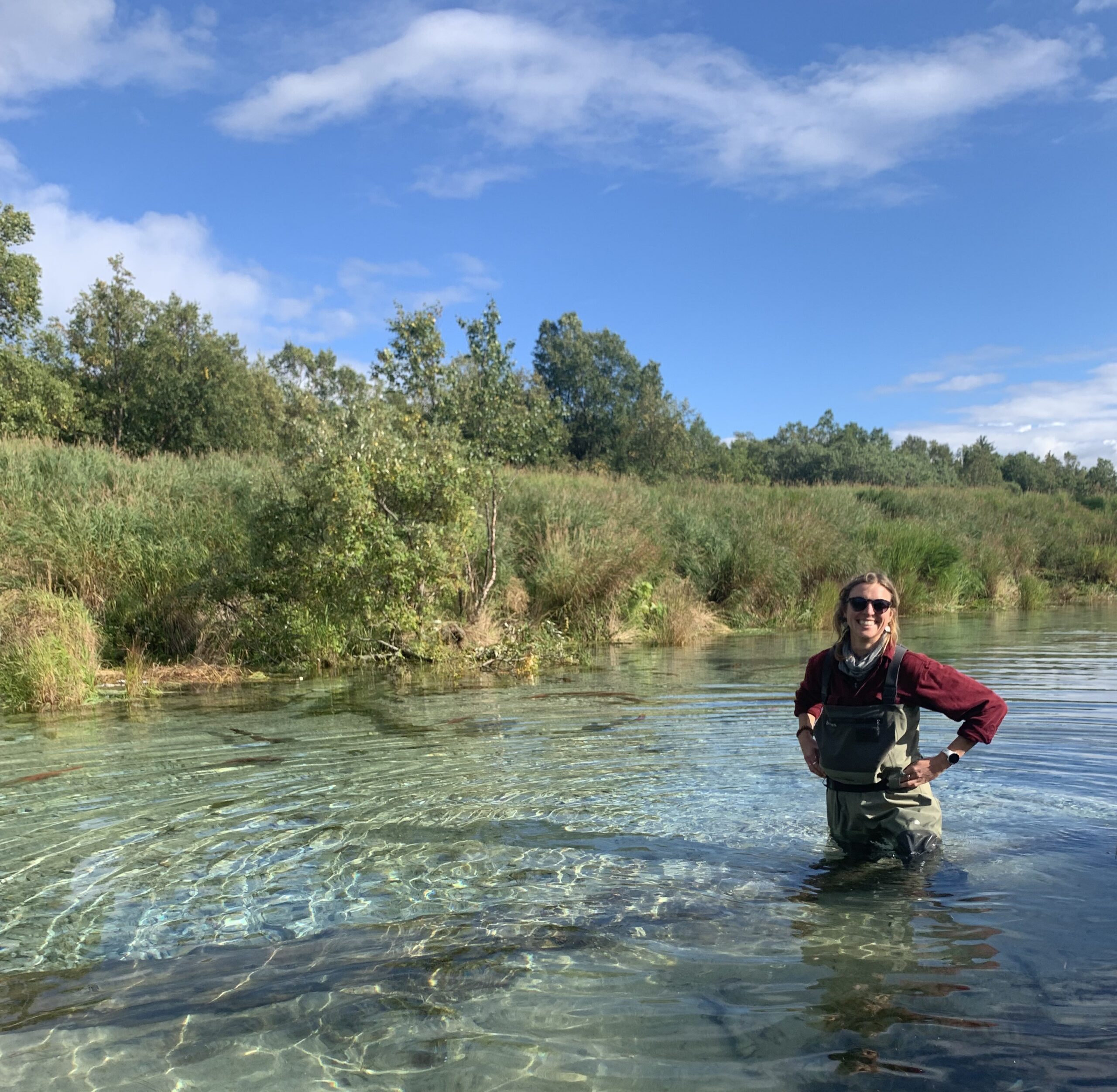
Dr. Genoa Sullaway grew up in Southern California, where the ocean is always west.
Then she moved to Seattle for a job with NOAA’s Northwest Fisheries Science Center. Orienting herself in the Salish Sea’s complex network of bays, lakes and fjords was a very different challenge. For help, she turned to salmon.
“Tracking where the salmon were helped me to figure out where I was in these strange new landscapes,” says Dr. Sullaway. “Salmon really helped me get to know both the Pacific Northwest and Alaska.”
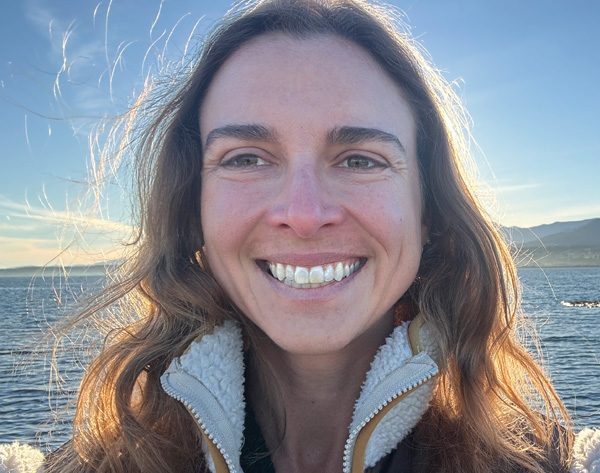
Photo Credit: Photo courtesy Dr. Genoa Sullaway.
As Wild Salmon Center’s new Fisheries Analyst, Dr. Sullaway leverages data to help us see where salmon are today—both physically, in oceans and rivers, as well as how they’re faring in a changing world.
Below, Dr. Sullaway shares why she doesn’t take a “winner-takes-all” approach to salmon conservation, the big questions her research can answer, and why her home river gives her hope.
“Tracking where the salmon were really helped me get to know both the Pacific Northwest and Alaska.”
Wild Salmon Center Fisheries Analyst Dr. Genoa Sullaway
Wild Salmon Center: Were salmon part of your early life?
Dr. Genoa Sullaway: They weren’t, not really. Around San Diego, rivers are different. They’re pretty dirty, with lots of concrete. My first connection came from eating salmon, as food. But perhaps even more, from loving the ocean.
My family are water people. Driving down the hill from my parent’s house, you can see tidepools and kelp forests. I grew up surfing and sailing. It’s remained a big force in my life. In my spare time now, in Port Angeles where I live, I spend a lot of my time connecting with the ocean. I free dive for sea urchins, forage for shellfish, recreate on or near the water.
Do you have a favorite salmon memory?
Maybe the first time I went to Lake Iliamna, in Alaska. It was 2023. I was completing my PhD in Fisheries with the University of Alaska at Fairbanks. My research focused on both Bristol Bay sockeye and chum populations in the Yukon River.
We came into the inlet of Knutson Bay, and the water was so blue, so clear. That year, Bristol Bay recorded the biggest run of sockeye it had ever seen, and before me stretched what seemed like walls of red fish. From the boat it seemed like it went on forever. I think sockeye are still my favorite fish.
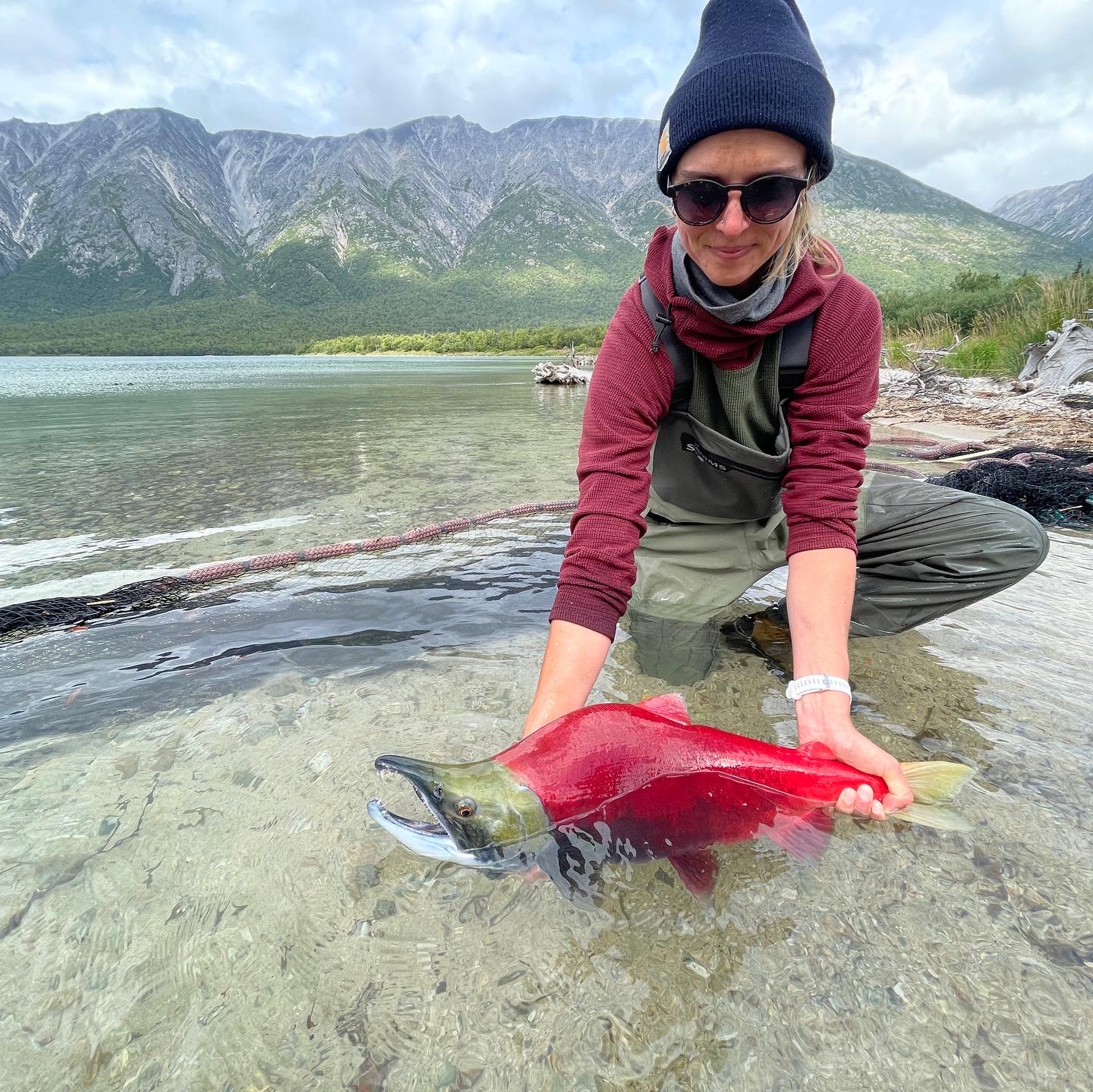
Photo Credit: Photo courtesy Dr. Genoa Sullaway.
What was the focus of your doctoral research?
Broadly speaking, I used models to understand how both climate change and anthropogenic factors impact salmon.
For Lake Iliamna sockeye, for example, I was looking at how changes in climate impact when sockeye come back from the ocean. One of the things we found is that in warm years both in the lake and in the ocean, sockeye runs were returning younger.
For Yukon chum, we looked at both climate and human factors, and how they impacted return numbers overall. It was clear from the data that these runs were struggling.
Zooming out: what would you say was your big takeaway?
In salmon conservation, sometimes people try to pick winners and losers. It’s true that sockeye in Bristol Bay so far seem to be doing really well at adapting to climate change—especially as compared with Yukon chum, who we’ve seen to be feeling negative impacts from climate change at all stages of their life cycle. By the data, some might say that these runs are losing in the race to adapt.
But conversations like that can leave out a huge lever, which is fisheries management. Every year, we change how we manage different fisheries. These decisions are actually right in the middle of the winners and losers narrative. So what we do, as humans, can be huge in nudging even a so-called loser toward more successful adaptation.
“In salmon conservation, sometimes people try to pick winners and losers. But that can leave out a huge lever. What we do, as humans, can be huge.”
Wild Salmon Center Fisheries Analyst Dr. Genoa Sullaway
You joined the Wild Salmon Center team in late 2025. What convinced you?
The stronghold approach is pretty exciting to me. It’s relatively unique in the conservation space. It brings a more positive lens to salmon conservation, in protecting these ecosystems that really do give us so much, rather than focusing on direness and decline.
I’m also excited to have a seat at the table between many groups. Inside the agencies that manage fisheries, folks are really busy day in and day out. It can be hard for our partners to find time to develop new tools, or move toward more sustainable fishing practices. In this role, I can zoom out, look at the bigger needs.
What kinds of needs are you seeing?
There are a lot of questions that we can answer to help our partners be more strategic with their resources. For me, I can thread a lot of salmon ecology data that’s out there—like the genetics work of my colleague Dr. Tasha Thompson—with other datasets to help with these decisions.
“It can be hard for our partners to find time to develop new tools, or move toward more sustainable fishing practices. In this role, I can look at the bigger needs.”
Wild Salmon Center Fisheries Analyst Dr. Genoa Sullaway
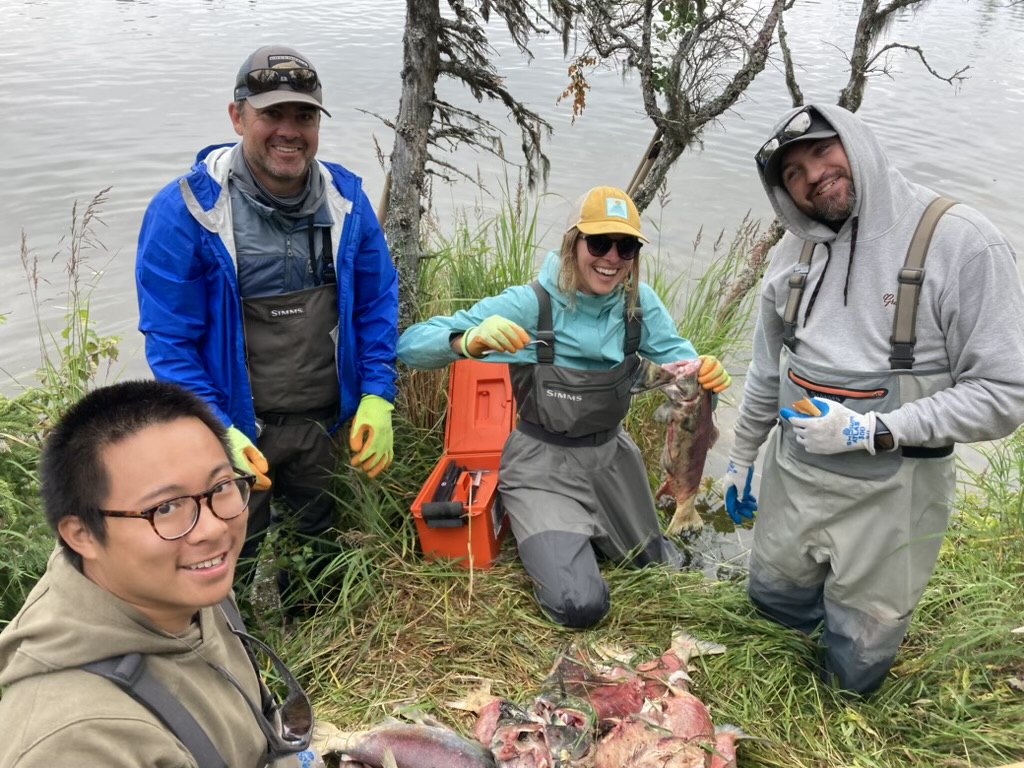
Photo Credit: Photo courtesy Dr. Genoa Sullaway.
Take spring Chinook: we’re looking at questions like whether access to exclusive habitat is make-or-break for the persistence of these populations. When spring Chinook can access places that fall Chinook can’t reach, what magnitude of benefit do we see? These are insights that could be really useful.
There are many questions right now about marine salmon fisheries—particularly around stock interception in the ocean. Where specific stocks are, for example, and how many are being caught at sea?
Answers are critical for fisheries to be able to adapt to climate change and the dynamics we’re seeing in salmon. With the Wild Salmon Center Science team, I’m working to pull together and synthesize data so that communities and fisheries can pursue more informed and equitable approaches to salmon management in a changing ocean.
Issues around salmon fisheries can be pretty fraught, especially between different nations and regions. How do you see your role?
Good science, in my view, can really help more people engage in processes like these. Conversations about salmon fisheries can be difficult and emotional. At Wild Salmon Center. I’m part of a team that’s deeply committed to sharing data in a fair way and helping people follow the science.
“Conversations about salmon fisheries can be difficult. I’m part of a team that’s committed to sharing data in a fair way and helping people follow the science.”
Wild Salmon Center Fisheries Analyst Dr. Genoa Sullaway
What kind of impact would you like to make with your research, in the coming years?
Ultimately, my hope is that my work can help drive change in fisheries management. For example, many managers today base escapement goals on the reproductive ability of an average salmon, salmon of a certain size. That average salmon size might be from the 1990s. And yet we know that fish are returning to rivers smaller and smaller. Smaller fish have fewer eggs. So these escapement goals might need to shift.
Since your boat trip to Knutson Bay, you’ve spent a lot more time in salmon rivers. What do these places mean to you today?
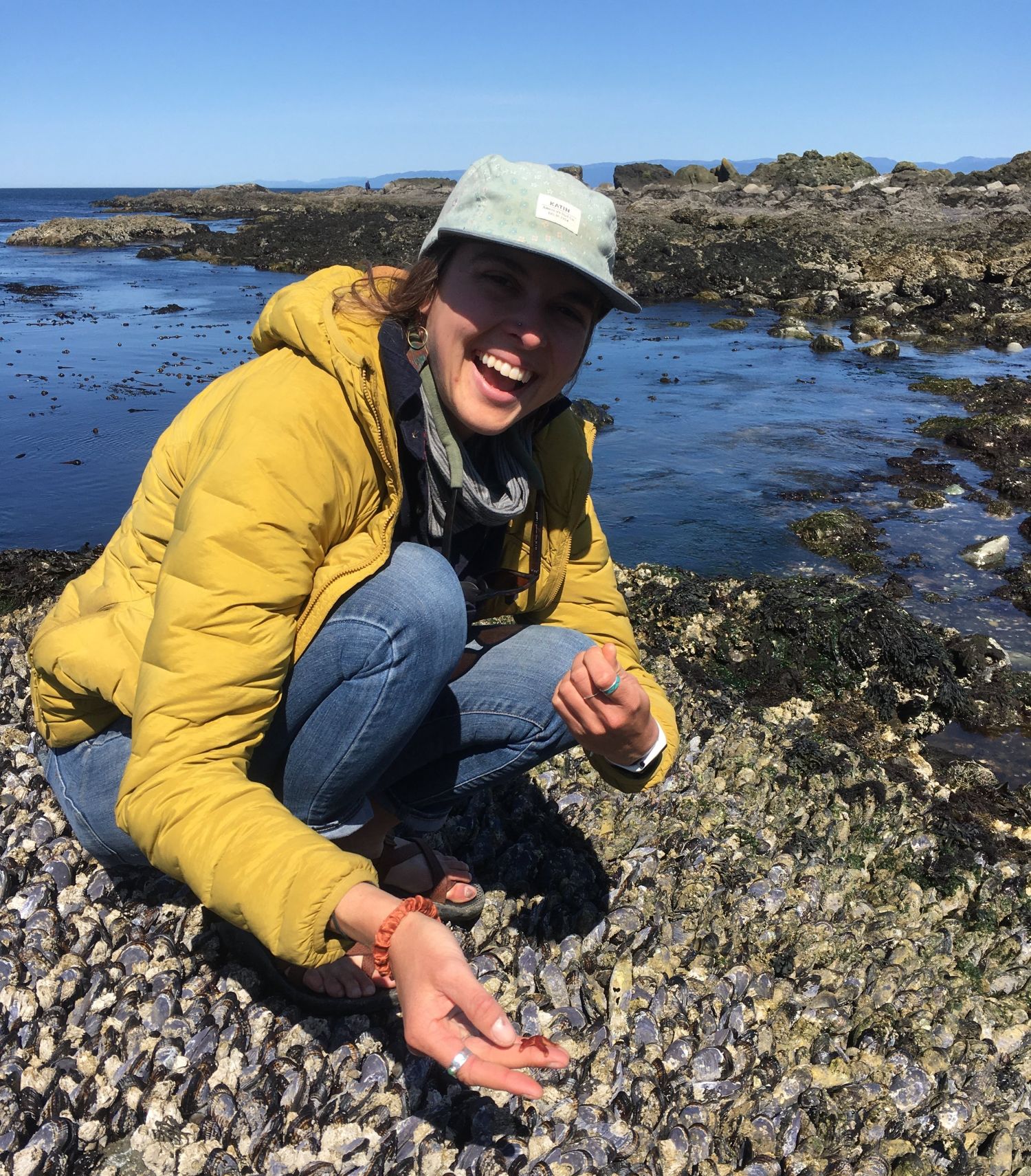
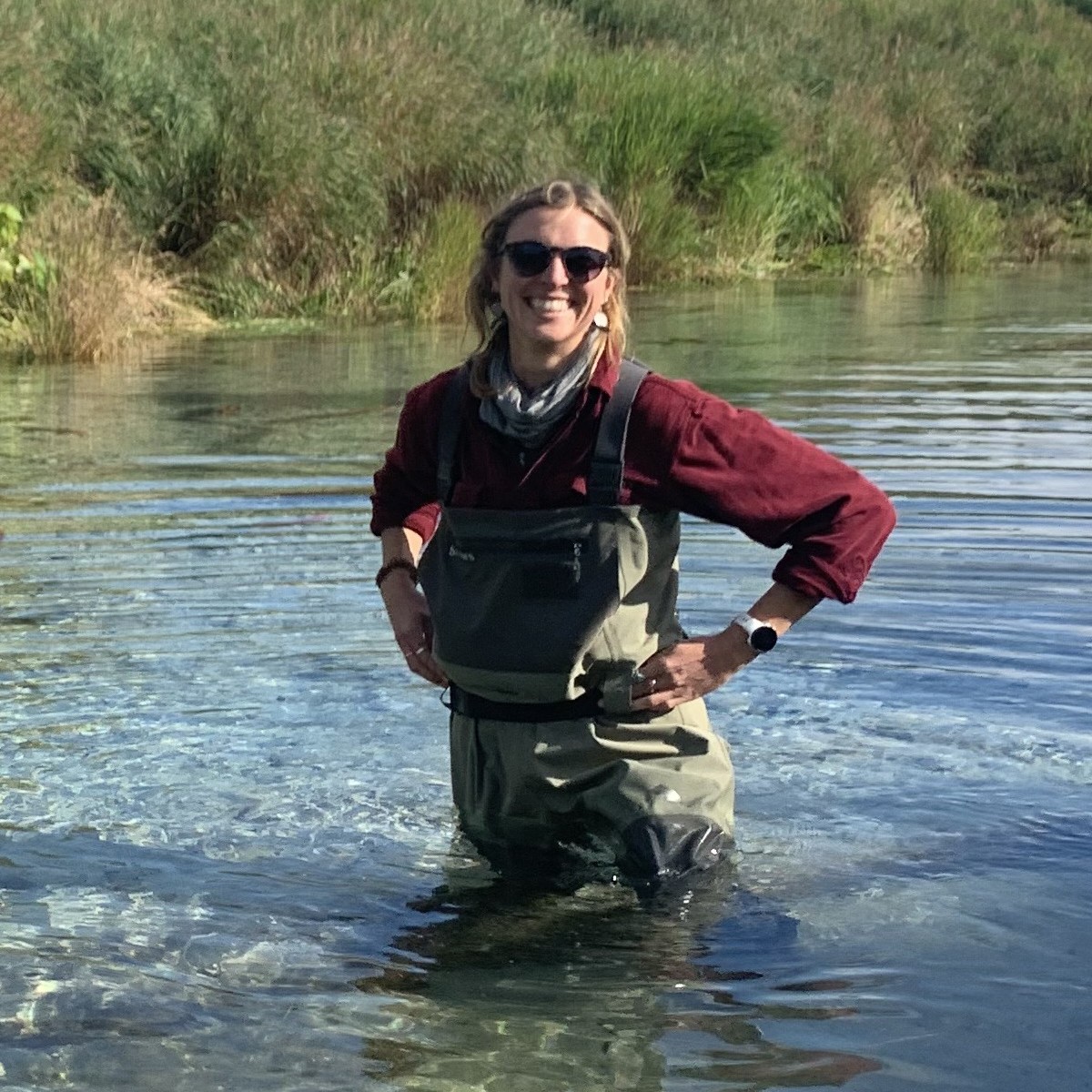
Photo Credit: Photo courtesy Dr. Genoa Sullaway.
I live about 10 miles away from the Elwha River. I see it every day. I walk my dog there, gather there with friends, camp and backpack along the stretch of the watershed. There’s an encouraging story there, with the return of ceremonial fisheries to the river.
I think about what salmon represent outside of ecology, or science. I think of them as part of my community. I think about hosting a potluck, having a bunch of people over where we’re all eating salmon. And I want to be able to keep doing that.
“I think about what salmon represent outside of ecology, or science. I think of them as part of my community.”
Wild Salmon Center Fisheries Analyst Dr. Genoa Sullaway
Hero Image (Home Page Section)
Related News
Artificial Intelligence, Meet Indigenous Fishing TechnologyOctober 18, 2023 Meet Dr. Tasha ThompsonNovember 17, 2022 What Glacier Melt Means For SalmonMarch 11, 2020Join the Movement
Stay up-to-date on what we’re doing for wild salmon and how you can help.
SUBSCRIBE