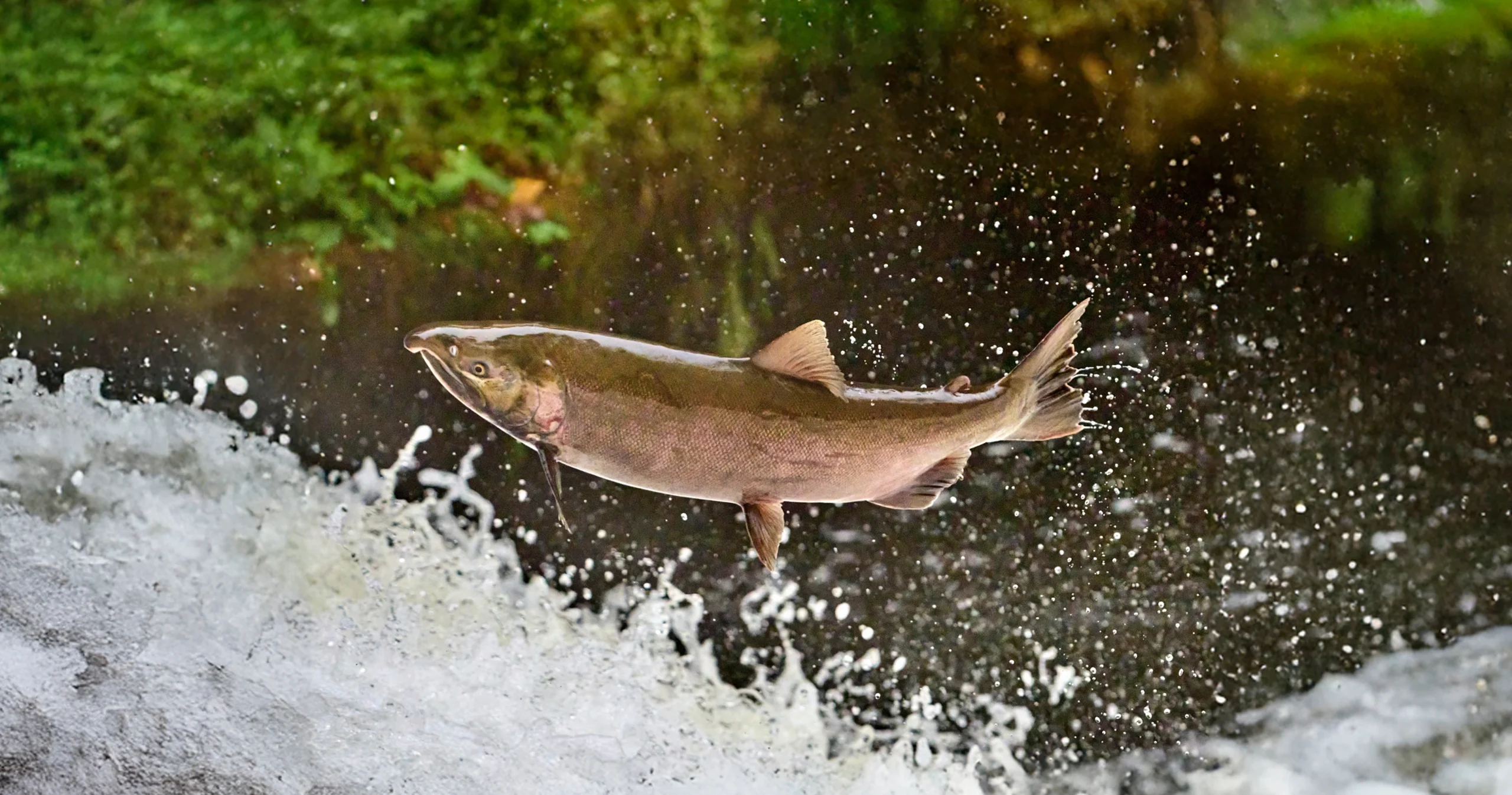
The Coquille Basin
Strategic Action Plan for Coho Salmon Recovery
Deep Dive
Read our Strategic Action Plan for Coho Salmon Recovery in the Coquille Basin
Contributors and Acknowledgments
The “Strategic Action Plan for Coho Salmon Recovery in the Coquille Basin” (SAP) was developed by a team dedicated to the restoration of Coho in the Coquille Basin. The team was comprised of state and federal resource managers, conservation professionals, scientists, and landowners:
- Coos Soil and Water Conservation District (CSWCD)
- Coquille Watershed Association (CoqWA)
- National Marine Fisheries Service (NMFS)
- National Oceanic and Atmospheric Administration (NOAA) Restoration Center
- Oregon Department of Fish and Wildlife (ODFW)
- Oregon Department of Environmental Quality (ODEQ)
- Oregon Watershed Enhancement Board (OWEB)
- Port of Bandon
- The Nature Conservancy (TNC)
- Wild Rivers Land Trust (WRLT)
- Wild Salmon Center (WSC)
- United States Forest Service (USFS)
- United States Bureau of Land Management (BLM)
This team would like to thank members of the Coast Coho Partnership (CCP), made up of the following agencies and NGOs: OWEB, ODFW, NOAA Fisheries, NOAA Restoration Center, and Wild Salmon Center (WSC). These organizations provided important facilitation and technical support for all aspects of the planning process, without which this plan would not have been possible.
We would also like to acknowledge the critical contributions of several project consultants, including:
TerrainWorks for generating the Netmap layers and conducting the initial spatial analyses and Barbara
Taylor for technical writing.
The Coquille Coho SAP team acknowledges the cooperative partnership formalized in 2022
between the Coquille Indian Tribe and Oregon Department of Fish and Wildlife to collaborate, share
resources, and develop and carry out plans to protect, restore, and enhance fish and wildlife populations
and their habitat in areas of southwest Oregon, including the Coquille River basin.
We are grateful for the funders of the planning effort—OWEB and NOAA Restoration Center—
and the first partners that stepped up to support this plan’s implementation—OWEB, NOAA, WSC,
and the National Fish and Wildlife Foundation.
Acronyms
AQI Aquatic Inventories Project
BMP Best Management Practice
CAP Conservation Action Plan
CCP Coast Coho Partnership
CFS Cubic Feet per Second
CWA Clean Water Act
DEQ Oregon Department of Environmental Quality
EPA U.S. Environmental Protection Agency
ESA Endangered Species Act
ESU Evolutionarily Significant Unit
FPA Oregon Forest Practices Act
IP Intrinsic Potential
KEA Key Ecological Attribute
LNWC Lower Nehalem Watershed Council
LSR Late Successional Reserves
MDN Marine-Derived Nutrients
NFWF National Fish and Wildlife Foundation
NGOs Non-governmental Organizations
NMFS National Marine Fisheries Service
NOAA National Oceanic and Atmospheric Administration
NRCS National Resources Conservation Service
NWFSC Northwest Fisheries Science Center
OC Oregon Coast
ODA Oregon Department of Agriculture
ODF Oregon Department of Forestry
ODFW Oregon Department of Fish and Wildlife
OWEB Oregon Watershed Enhancement Board
RM River Mile
SAP Strategic Action Plan
SWCD Soil and Water Conservation District
TEP Tillamook Estuaries Partnership
TMDL Total Maximum Daily Load
TNC The Nature Conservancy
UNWC Upper Nehalem Watershed Council
USDA U.S. Department of Agriculture
USFS U.S. Forest Service
USFWS U.S. Fish and Wildlife Service
WRLT Wild Rivers Land Trust
WSC Wild Salmon Center
Contents
Contributors and Acknowledgments………………………………………………………………………………….. i
Acronyms……………………………………………………………………………………………………………………… ii
List of Figures…………………………………………………………………………………………………………………v
List of Tables…………………………………………………………………………………………………………………vi
Executive Summary………………………………………………………………………………………………………..vii
- Introduction…………………………………………………………………………………………………………. 1
1.1 Why Coho………………………………………………………………………………………………………. 1
1.2 A Watershed Indicator………………………………………………………………………………………. 1
1.3 A Threatened Species and a Changing Climate……………………………………………………… 2
1.4 An Opportunity for Recovery…………………………………………………………………………….. 4 - Overview of the Coquille Coho SAP Team and Scope of This Plan……………………………….. 5
2.1 Team Roles……………………………………………………………………………………………………… 5
2.2 Scope of the Coquille Coho Strategic Action Plan …………………………………………………. 6
2.3 Coquille Coho SAP Framework………………………………………………………………………….. 8
2.4 Core Values…………………………………………………………………………………………………….. 8
2.5 Partnership Vision for Coquille Coho Recovery…………………………………………………….. 9 - The Coquille River Basin………………………………………………………………………………………. 10
3.1 Biophysical……………………………………………………………………………………………………. 10
3.2 Geology………………………………………………………………………………………………………… 10
3.3 Geography…………………………………………………………………………………………………….. 12
3.4 Climate and Hydrology…………………………………………………………………………………… 13
3.5 Land Cover……………………………………………………………………………………………………. 15
3.6 Historical — Humans on the Landscape…………………………………………………………….. 17
3.7 Current Socioeconomic Conditions…………………………………………………………………… 19
3.8 Land Use and Ownership………………………………………………………………………………… 19
3.9 Economy………………………………………………………………………………………………………. 21 - Coquille Basin Coho and Habitat ………………………………………………………………………….. 23
4.1 The Coquille Coho Life Cycle…………………………………………………………………………… 23
4.2 Wild Coho Distribution, Abundance, and Productivity…………………………………………. 26
4.3 Hatchery Production and Releases in the Coquille Basin………………………………………. 29
4.4 Harvest Management……………………………………………………………………………………… 30
4.5 Coho Habitat Needs and Watershed Component Types……………………………………….. 30
4.6 Climate Change Impacts to Coquille Coho…………………………………………………………. 37
iv ~ SAP for Coho Recovery in the Coquille Basin - Impaired Watershed Processes and Resulting Stresses on Coho Habitats…………………………… 40
5.1 Ongoing and Anticipated Threats to Coquille Coho…………………………………………….. 41
5.2 Coquille Sub-watershed Stress Assessment………………………………………………………….. 44 - Methods for Developing the Coquille Coho Strategic Action Plan…………………………………… 54
6.1 Ecological Priorities for OC Coho Recovery in the Coquille Basin…………………………. 54
6.2 Long-term Ecological Goals……………………………………………………………………………… 58
6.3 Restoration Strategies in the Coquille Basin………………………………………………………… 58
6.4 Theory of Change…………………………………………………………………………………………… 58
6.5 Netmap as a Tool to Test and Refine Project Locations………………………………………… 61
6.6 Ranking and Prioritization of Sub-watersheds…………………………………………………….. 62 - Focal Areas for Coho in the Coquille Basin…………………………………………………………………… 65
7.1 Lower Coquille Subbasin Focal Areas………………………………………………………………… 65
7.2 North Fork Coquille Subbasin Focal Areas………………………………………………………… 73
7.3 East Fork Coquille Subbasin Focal Areas…………………………………………………………… 78
7.4 South Fork Coquille Subbasin Focal Areas…………………………………………………………. 80
7.5 Middle Fork Coquille Subbasin Focal Areas……………………………………………………….. 86 - Long-term Strategies, Outcomes, and Short-term Work Plan…………………………………………… 90
8.1 Long-term Strategies, Outcomes, and Actions…………………………………………………….. 90
8.2 Short-term Implementation……………………………………………………………………………. 100
8.3 Short-term Project Outputs……………………………………………………………………………. 106 - Funding Needs: Estimated Costs……………………………………………………………………………….. 107
- Adaptive Management…………………………………………………………………………………………… 109
10.1 Monitoring Framework……………………………………………………………………………….. 110 - Reference…………………………………………………………………………………………………………….. 115
Appendix I – Glossary…………………………………………………………………………………………………. 120
Appendix II – Description and Rationale for Criteria Used to Prioritize Sub-watersheds………… 124
Appendix III – Water Temperature Exceedances in the Coquille Basin………………………………… 144
List of Tables
Table 4.2.1 Estimated ESU scale abundance of Coho salmon pre-harvest and post-harvest and estimated harvest rates.
Table 4.2.2 Estimated abundance of Coquille Coho salmon pre-harvest and post-harvest and estimated harvest rates.
Table 5.2.1 Coquille Basin stress assessment.
Table 6.1.1 Common restoration techniques and their effect on temperature, flow, and resilience.
Table 6.3.1 Summary of major stressors identified by the Coquille Coho SAP technical team in each habitat component.
Table 6.6.1 Sub-watershed evaluation parameters and ranking score weights for each parameter.
Table 8.1.1 Summary of the long-term outcomes (2024-2045), by strategy, in high-priority focal sub-watersheds.
Table 8.2.1 Short-term projects identified in high-priority focal areas.
Table 9.1 Focal areas, project names, project lead, project type, long-term strategy, and cost
Table 10.1.1 Implementation and effectiveness monitoring table for the Coquille SAP long-term outcome 1.
Table 10.1.2 Implementation and effectiveness monitoring table for the Coquille SAP long-term outcome 2.
Table 10.1.3 Implementation and effectiveness monitoring table for the Coquille SAP long-term outcome 3.
Table 10.1.4 Implementation and effectiveness monitoring table for the Coquille SAP long-term outcome 4.
Table 10.1.5 Implementation and effectiveness monitoring table for the Coquille SAP long-term outcome 5.
Table 10.1.6 Implementation and effectiveness monitoring table for the Coquille SAP long-term outcome 6.
Table 10.1.7 Implementation and effectiveness monitoring table for the Coquille SAP long-term outcome 7.
List of Figures
Figure 2.2.1 Major forks and tributaries in the Coquille Basin and 6th field HUC sub-watersheds.
Figure 3.2.1 Geology of the Coquille Basin.
Figure 3.4.1 Current water temperatures in the Coquille Basin.
Figure 3.5.1 Land cover types throughout the Coquille Basin.
Figure 3.8.1 Map of land ownership in the Coquille Basin.
Figure 4.1.1 The ‘standard’ Coho salmon life history strategy.
Figure 4.2.1 Coquille Coho spawning and rearing distribution.
Figure 4.5.1 Intrinsic potential (IP) for Coho salmon in the Coquille Basin.
Figure 4.5.2 Components of a watershed.
Figure 4.5.3 The Coquille Basin watershed.
Figure 4.6.1 Modeled change in August stream temperatures between historical conditions and conditions expected in 2040.
Figure 4.6.2 Modeled change in August stream temperatures between historical conditions and conditions expected in 2080.
Figure 4.6.3 Modeled change in summer stream flows between historical conditions and conditions expected in 2040.
Figure 4.6.4 Modeled change in summer stream flows between historical conditions and conditions expected in 2080.
Figure 5.1.1 North Fork Coquille River splash dam.
Figure 5.1.2 Smallmouth bass predation of a juvenile salmonid.
Figure 5.1.3 Mean August water temperatures in the Coquille Basin between 1993 and 2011.
Figure 5.1.4 Livestock directly in the Lower Coquille River.
Figure 5.1.5 Livestock with direct access to the Lower Coquille River.
Figure 5.1.6 Striped bass caught near Riverton, OR.
Figure 5.1.7 Channelization and altered riparian function along the Lower Coquille River.
Figure 6.1.1 Distribution of smallmouth bass in the Coquille Basin.
Figure 6.1.2 Coho spawning and rearing habitat.
Figure 6.5.1 Netmap anchor habitat output.
Figure 6.6.1 Coquille sub-watershed ranking by prioritization criteria.
Figure 6.6.2 Sub-watershed ranking in the Coquille Basin.
Figure 7.1.1 High-priority focal sub-watersheds in the Coquille Basin.
Figure 7.1.2 High-priority focal sub-watersheds in the Lower Coquille River.
Figure 7.2.1 High-priority focal sub-watersheds in the North Fork Coquille River.
Figure 7.3.1 High-priority focal sub-watersheds in the East Fork Coquille River.
Figure 7.4.1 High-priority focal sub-watersheds in the South Fork Coquille River.
Figure 7.5.1 High-priority focal sub-watersheds in the Middle Fork Coquille River.
Figure 8.1 Netmap identified riparian restoration priorities.
Figure 8.1.1 Long-term strategies identified in Coquille Basin focal watersheds.
Figure 8.1.2 Cold water sources in focal sub-watersheds.
Figure 8.1.3 Areas identified to increase instream complexity.
Figure 8.1.4 Long-term strategies and focal areas identified in the Lower Coquille.
Figure 8.1.5 Long-term strategies and focal areas identified in the North Fork Coquille.
Figure 8.1.6 Long-term strategies and focal areas identified in the East Fork Coquille.
Figure 8.1.7 Long-term strategies and focal areas identified in the Middle Fork Coquille.
Figure 8.1.8 Long-term strategies and focal areas identified in the South Fork Coquille.
Figure 8.2.1 Short-term projects identified in the Lower Coquille.
Figure 8.2.2 Short-term projects identified in the North Fork Coquille.
Figure 8.2.3 Short-term projects identified in the East Fork Coquille.
Figure 8.2.4 Short-term projects identified in the Middle Fork Coquille.
Figure 8.2.5 Short-term projects identified in the South Fork Coquille.
Executive Summary
Coho salmon (Oncorhynchus kisutch) have returned year after year to the Coquille River, its tributaries, and the estuaries for millennia. Coho salmon in the Coquille Basin evolved unique adaptations that have allowed them to survive and flourish in the ever-changing, diverse coastal environment. Prior to the arrival of European settlers, the estimated historical abundance of Coho salmon ranged between 310,000 and 417,000 adults returning annually to the Coquille Basin to spawn.
Around the Pacific Rim, salmon have been the foundation of a social-ecological system supporting Indigenous Peoples since time immemorial. European settlers arrived in the Coquille Basin in the 1800s. Their arrival of which initiated over 150 years of resource extraction for gold, fisheries, timber, and agriculture, substantially affecting watershed health and function. These practices impaired habitats and ecosystem processes throughout the Coquille Basin, reducing habitat quantity and quality and, ultimately, the abundance and productivity of Coho and other salmonid populations. Factors leading to salmonid declines include fish passage barriers, loss of stream complexity, degraded water quality, and conversion of estuary and wetlands into agricultural lands. In addition to reduced habitat quantity and quality, the combined effects from Coho hatchery production, high harvest rates, and poor ocean conditions contributed to the collapse of Oregon Coast (OC) Coho in the 1990s.
The decline of the Coquille Coho population mirrored that of OC Coho across their range. Due to the widespread decline, the OC Coho “evolutionarily significant unit” (ESU) was listed as “threatened” by the National Marine Fisheries Service (NMFS) in 1998. The ESU declined to an estimated low of 23,661 spawning adults in 1997, and the Coquille Coho population declined to a low of 2,622 spawning adults in 1998. Since the federal Endangered Species Act (ESA) listing over 25 years ago, OC Coho have experienced cycles of increasing abundance trends throughout their range. The estimated ESU average between 2020 and 2023 was 188,398 spawners. However, the ESU remains listed due to inadequate habitat protections and degraded watershed conditions. Climate change is projected to further hinder the abundance and productivity of OC Coho and other salmonid populations throughout the Pacific Northwest.
After the federal ESA listing, two conservation plans were developed to help guide recovery efforts for OC Coho: the “Oregon Coast Coho Conservation Plan.” published by the State of Oregon in 2007, and the “Final ESA Recovery Plan for Oregon Coast Coho Salmon,” a federal plan produced by NMFS in 2016. These plans provide a road map for conservation and recovery and include broad strategies to restore and protect populations within the ESU. The overall goal of both the state and federal plans is to recover OC Coho so that ESA protection is no longer necessary. The Coquille Coho Strategic
Action Plan (SAP) builds upon these plans by identifying specific locations and actions within the Coquille Basin where habitat protection and restoration can have the greatest benefits to watershed function and Coho production. The process of developing the Coquille Coho SAP began in 2022 when restoration practitioners and local fisheries managers agreed that a comprehensive Coquille Basin-specific plan was needed to: 1) determine specific locations where protection and restoration strategies would have the greatest positive impact toward increasing watershed function and habitat productivity over the long term, 2) coordinate project implementation and leverage funding in the short term, and
3) formalize the commitment of a robust set of partners who have collaborated on Coho recovery and will continue to do so into the future. The Coquille Watershed Association (CoqWA) convened this effort with the support of the Coast Coho Partnership, a team of public and private agencies and organizations working to accelerate the pace of Coho recovery throughout the Oregon Coast. These efforts focus on Coho salmon because they are a “keystone” species, meaning that numerous other plant and animal species rely on them for their survival during some part of their life cycle. Coho spend over a year in freshwater, making them an excellent year-round indicator of watershed health. And because they spend
a full year in freshwater, Coho occupy a wide range of habitats that other salmonids utilize over space and time. Consequently, the protection and restoration of Coho habitats (and the watershed processes that generate them) often directly benefit other salmonids and aquatic species.
The Coquille Coho salmon population is one of 21 independent populations that comprise the OC Coho Salmon ESU. While important variations exist in the “standard” Coho life history, generally, Coho spend approximately 18 months in freshwater before migrating to the sea. During this freshwater and estuary residency, they rely heavily on instream pools and off-channel habitats connected to mainstem and tributary channels. These off-channel habitats include alcoves, beaver ponds, side channels, and tidal and freshwater wetlands. In addition to providing food resources, these habitats generate and maintain clean, cool water in the summer and serve as refuge areas from high-velocity flows in the winter.
The watershed processes that produce and maintain these vital habitats have undergone significant changes since European settlement began in the mid-19th century. The resource extraction economy that fueled the settlement of the region has altered the “key ecological attributes” (KEAs) of the watershed that are essential to the production of high-quality Coho habitats. The modified KEAs that most severely limit Coho production include reduced tributary habitat complexity, reduced lateral connectivity between channels and floodplains, reduced riparian (streamside vegetation) function, reduced beaver ponds, and impaired water quality that includes elevated water temperatures, reduced dissolved oxygen levels, and increased bacteria loading in the Coquille Basin tributaries and mainstems. Most notably in recent years, elevated summer temperatures have reached near-lethal levels for salmonids and are creating thermal barriers that restrict Coho movement between critical habitats, while at the same time increasing the spatial extent of aquatic invasive species.
Our team approached the development of this SAP with the core belief that healthy ecological, economic, and social conditions are needed to ensure a sustainable future for Coquille Coho salmon. Through the implementation of this SAP, local partners hope to achieve the following longterm goals shown on the previous page.
To achieve these goals, this SAP emphasizes the restoration of critical Coho habitats by repairing the watershed processes that generate and maintain them. This process-based approach relies on an anchor habitat strategy, which seeks to identify, protect, and restore stream reaches most capable of supporting Coho across the full spectrum of their freshwater residency, including egg incubation, rearing, smolting, and spawning. The primary strategies presented in this plan seek to conserve and increase the quality and quantity of habitats by enhancing riparian areas in order to increase shade and lead to future largewood delivery to tributaries; actively installing large-wood structures and recruiting beavers to promote instream complexity and floodplain interaction in and around critical habitats; and reconnecting tidal wetlands. Importantly, however, one of the core tenets of this plan is that ecosystem function can be restored while preserving the working landscape. The ultimate vision is a healthy basin, connected from headwaters to the ocean, that supports a thriving fish population and a vital local economy. The Coquille SAP identified 15 sub-watersheds as “focal areas.” These watersheds were selected using a “stronghold” approach that included a robust set of ecological ranking criteria used to evaluate each sub-watershed. The focal areas (6th field Hydrologic Unit Code [HUC]) selected are shown below.
Through the implementation of the short-term projects identified in this SAP, the team intends to reach the following restoration outcomes by 2030 in these 15 sub-watersheds: •
Improve water quality within 11.3 miles of tributaries and mainstems.
- Increase instream complexity on 29.9 acres of tributaries and mainstems.
- Enhance a minimum of 116.5 acres of riparian areas.
- Increase longitudinal connectivity on 16.4 miles of tributaries and mainstems.
- Remove or upgrade 11 fish passage barriers.
- Increase lateral connectivity on 2,036.8 acres of tidal and freshwater floodplains.
- Perform sub-watershed assessment in 11 high-priority focal basins.
The team developed a monitoring framework to evaluate both the rate at which the SAP is being implemented and the degree to which it is producing the desired results at a meaningful scale. The monitoring framework also presents several important data gaps, which, once filled, may redirect the team’s priorities in order to adapt the plan.
This SAP, like all plans, has been generated with imperfect and evolving information. Most notably, considerable uncertainty exists regarding how global climate change predictions will challenge many of the assumptions made about future local watershed conditions and how aquatic systems may respond to restoration actions. Additionally, the implementation of projects identified in the SAP relies on willing landowners. Thus, adaptive management is essential to the long-term success of this plan and the partnership’s ability to reach stated outcomes.
Continue reading the full strategic action plan here.