What Salmon Should I Eat?
Should you eat salmon? And if so, what kind? We break down what you need to know to shop—and eat—with confidence.
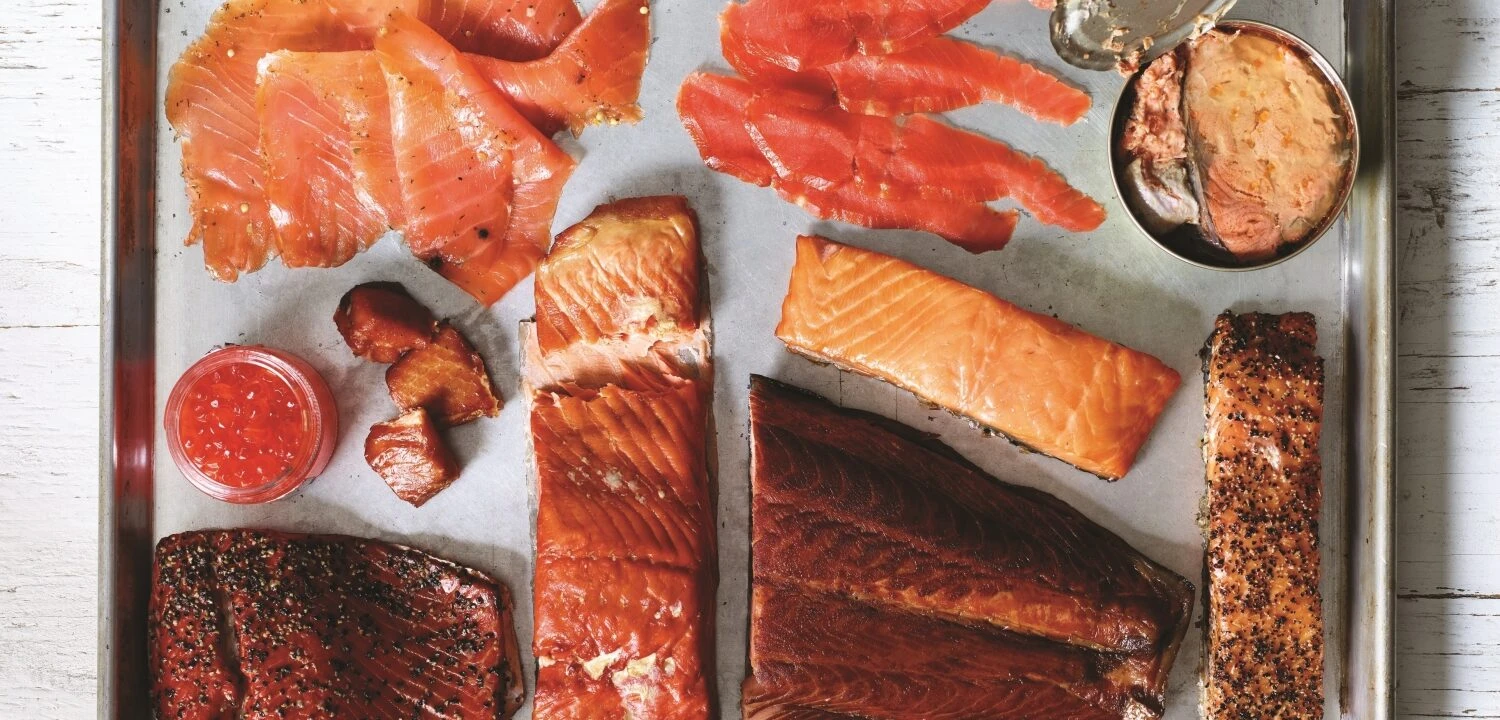
Photo Credit: $copyright
Two of the most frequent questions we get from people are should I eat salmon? And if so, which kind? The short answer to the first is YES. But like any food derived from the wild, it’s part of a complex ecological web and has to be approached with care.
Here at Wild Salmon Center our mission is based on ensuring the long-term health of wild salmon populations, and we believe being a conscious consumer of wild salmon is an important part of the species’ conservation. Here’s why:
1. When you protect salmon, you protect a whole watershed and everything in it. The most beautiful rivers of the Pacific all depend on salmon;
2. Eating and purchasing wild salmon fuels a $3 billion fishing industry, provides thousands of jobs, and supports countless communities across the Pacific; and
3. Salmon are a superfood, packed with essential nutrients, and one of our last wild proteins.
Wild versus Farmed Salmon: What’s the difference?
Wild-Caught
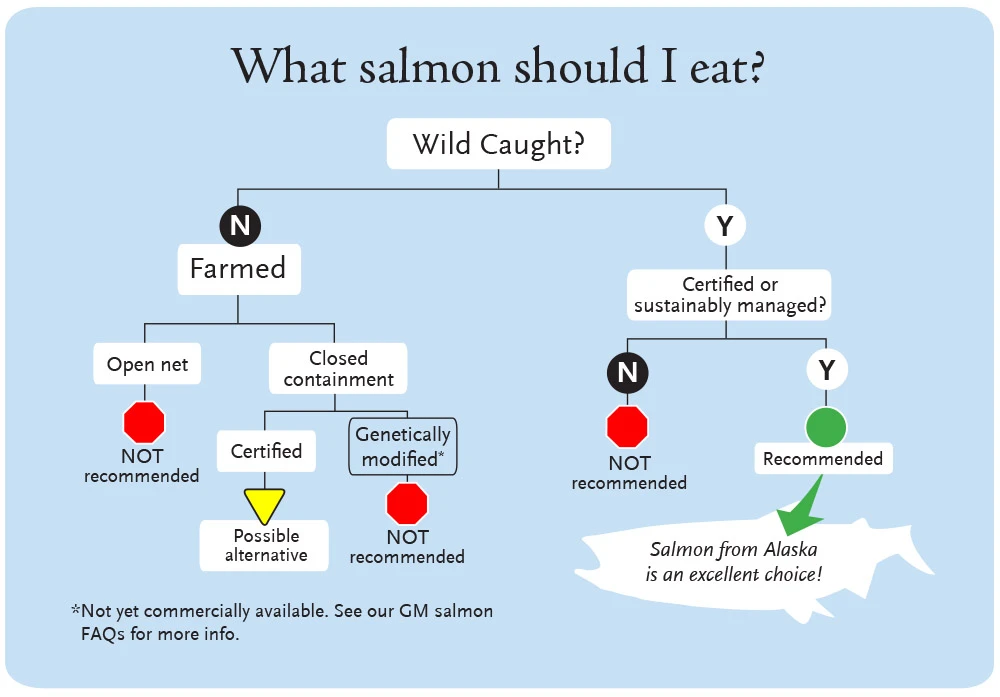
The term “wild caught” means that the salmon was caught in the wild. Some wild-caught salmon originate from hatcheries to supplement wild stocks. As long as these hatcheries are managed to have a minimum impact on wild populations, wild-caught salmon from Alaska and British Columbia is your best bet when purchasing salmon.
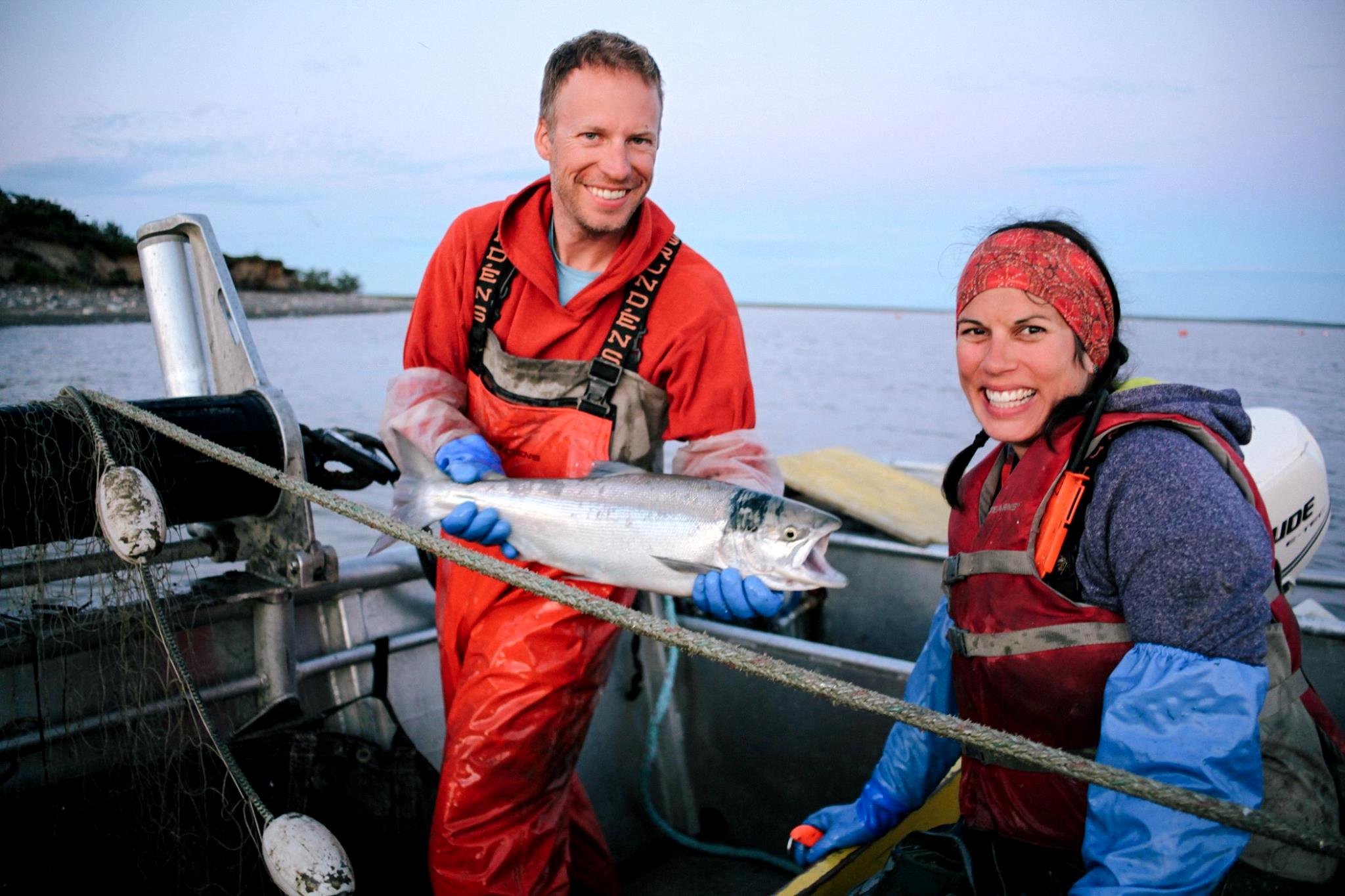
Photo Credit: Iliamna Fish Co.
These fish matured to adulthood in the wild, at a natural pace, and ate a wild, marine diet. Unlike Atlantic salmon, there are still healthy wild stocks of Pacific salmon. Alaskan fisheries, for example, rank as among the world’s healthiest and best-managed, due to a focus on sustainable yield: the idea that you only harvest an amount that doesn’t jeopardize the long-term health of fish stocks.
The TLDR? We suggest buying wild-caught sockeye salmon from Alaska and British Columbia.
Top Three Ways to Make Sure Your “Wild Salmon” isn’t a Fraud
There’s been a lot of documentation lately of seafood being mislabeled. To ensure that the salmon you are purchasing is truly “as advertised,” take these precautions:
1. Purchase salmon with recognized certification labels of sustainability like the Marine Stewardship Council (MSC). Better yet, purchase straight from the source—either from the processor or a community supported fishery.
2. Any fish marketed as both “fresh” and “wild” in the winter months is likely a fraud. Either it is farmed, or it is wild and has been flash-frozen—which is a completely acceptable option in the non-season months.
3. If it seems too good to be true (i.e. low price for premium fish), it probably is.
Farmed Salmon
Farmed salmon are fish that are commercially-raised in some form of an enclosure. Fish farming methods do vary. But in terms of what to look for as a consumer, most can be divided into two categories: open net-pens and closed-containment systems.
Open Net-Pens
Open net-pens are usually located in coastal waters in a cage or net system, such as the salmon farms off the coast of British Columbia. Evidence points to these open net-pens still not being a good choice. Here’s what you need to know:
1. Fish escaping is a big problem. When farmed salmon escape into the wild and breed with wild fish it reduces the genetic diversity and fitness of wild populations. Escaped fish also spread parasites and diseases.
2. Over-crowding breeds diseases and requires chemical interventions. Many net-pens rapidly spread diseases and sea lice, requiring farmed fish to be treated with chemicals. Sea lice, while rarely found on juvenile fish in the wild, are increasingly seen on juveniles in areas where net-pens are located.
3. Pigment coloring is not an uncommon practice. Some farms use synthetic carotenoid pigments to give the farmed fish the ‘natural’ color of their wild counterparts.
4. Pollution is common. Uneaten feed and feces accumulate at the bottom of the pens, creating large concentrations of pollutants in the surrounding water, depleting oxygen levels, and releasing noxious gases into the water and atmosphere.
Closed-Containment Systems
Closed-containment systems utilize an impenetrable barrier that separates the farmed fish from the outside environment. A closed system prevents the transmission of diseases and parasites, eliminates issues with escapement, requires fewer chemicals, and uses less feed. Another benefit is the waste gets treated within the system instead of being pumped into the ocean. Living Oceans has been engaged in the development of sustainable standards for aquaculture practices and says that while this type of system is on the rise, its use is limited due to its high cost of investment and the production costs per fish.
We suggest you avoid purchasing farmed salmon from open net pen farms due to their negative environmental impacts and health drawbacks. If sustainably-caught wild salmon is not an option, we suggest you only choose salmon farmed in a closed-containment system, and from a reputable source with a recognized certification program.
Related News
Seattle Chef Renee Erickson: Eat This SalmonOctober 30, 2019 Portland Timbers Chef Rich Meyer: Eat This SalmonDecember 5, 2019 Vancouver Chef Rob Clark: Eat This SalmonApril 29, 2021Join the Movement
Stay up-to-date on what we’re doing for wild salmon and how you can help.
SUBSCRIBE