Meet the Tugur River salmon eaters
As the world’s largest salmonid gets bigger, cousins start to look like food.
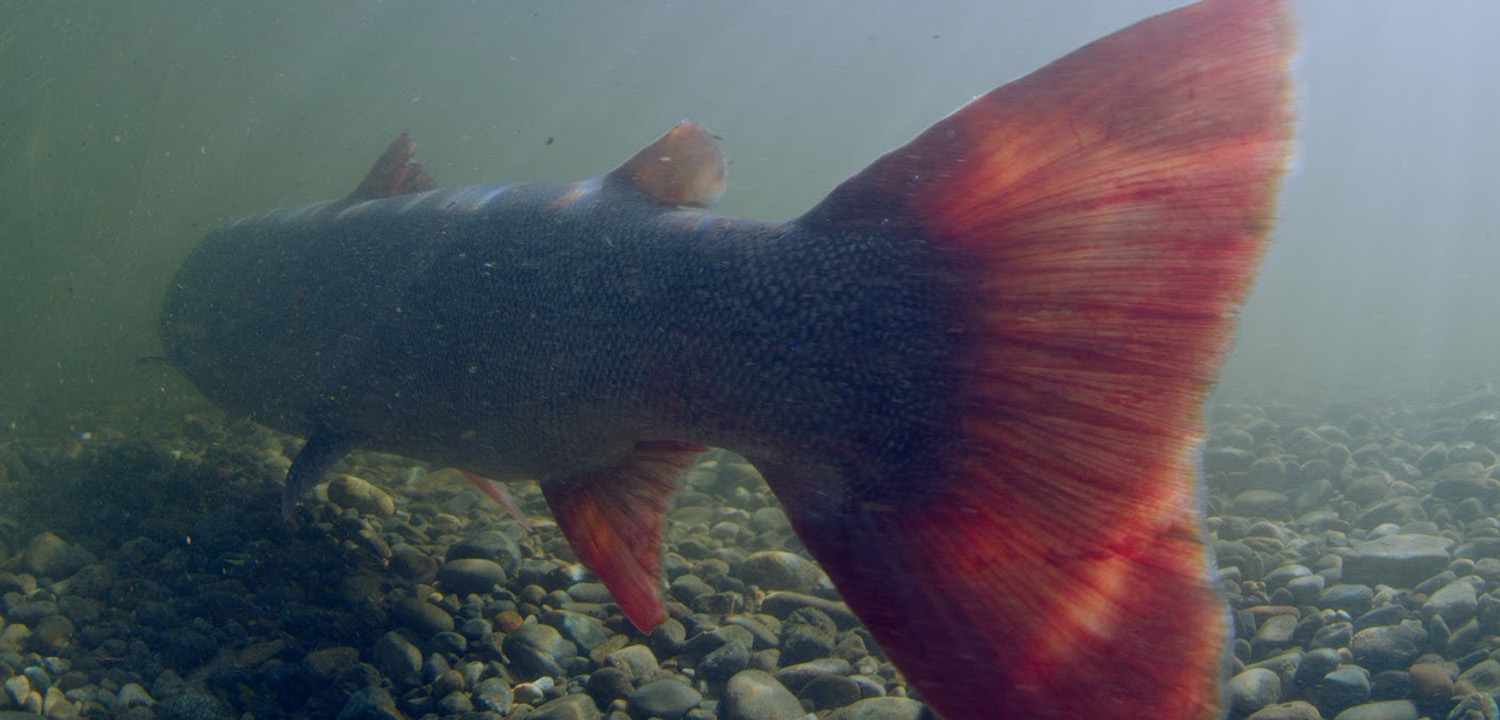
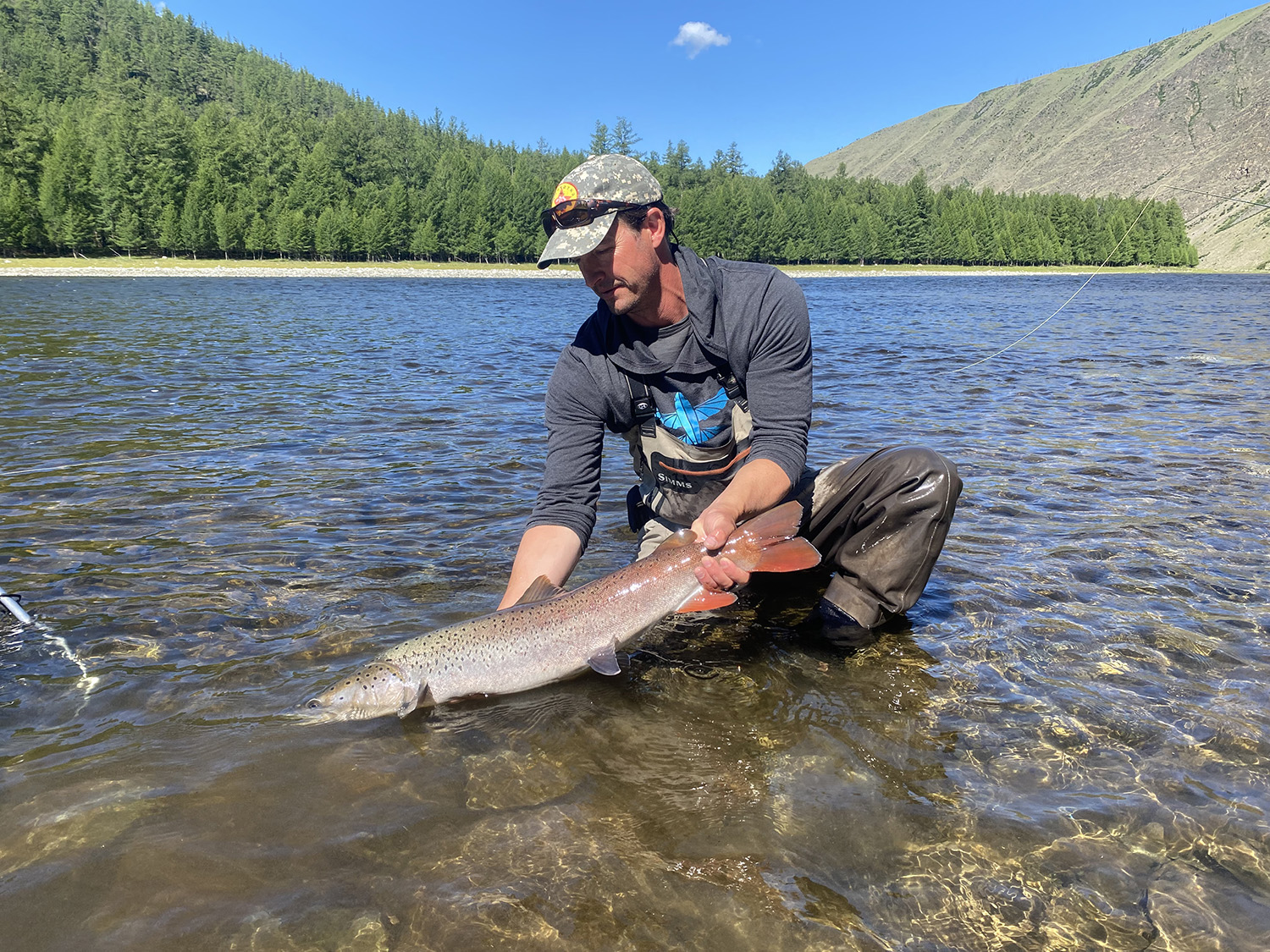
What does a 100-pound Siberian taimen eat for dinner? Whatever fits in its mouth, finds a new study in the peer-reviewed journal Conservation Letters. In the Tugur River of the Russian Far East, that includes a relative: adult salmon.
Siberian taimen are a Eurasian salmonid that once ruled rivers spanning nearly one-tenth of the Earth’s land mass—from the Mongolian steppe to the Arctic circle. These apex predators travel widely in their home rivers, with lifespans that can surpass 40 years. Taimen are considered an umbrella species, meaning that when they thrive, conditions are right for countless other species to thrive alongside them.
But according to study co-author and Wild Salmon Center Science Director Dr. Matthew Sloat, many taimen populations are now in peril, due to factors including climate change, habitat loss, livestock grazing, and human encroachment. Population declines are significant enough for the International Union for Conservation of Nature to list Siberian taimen as threatened.
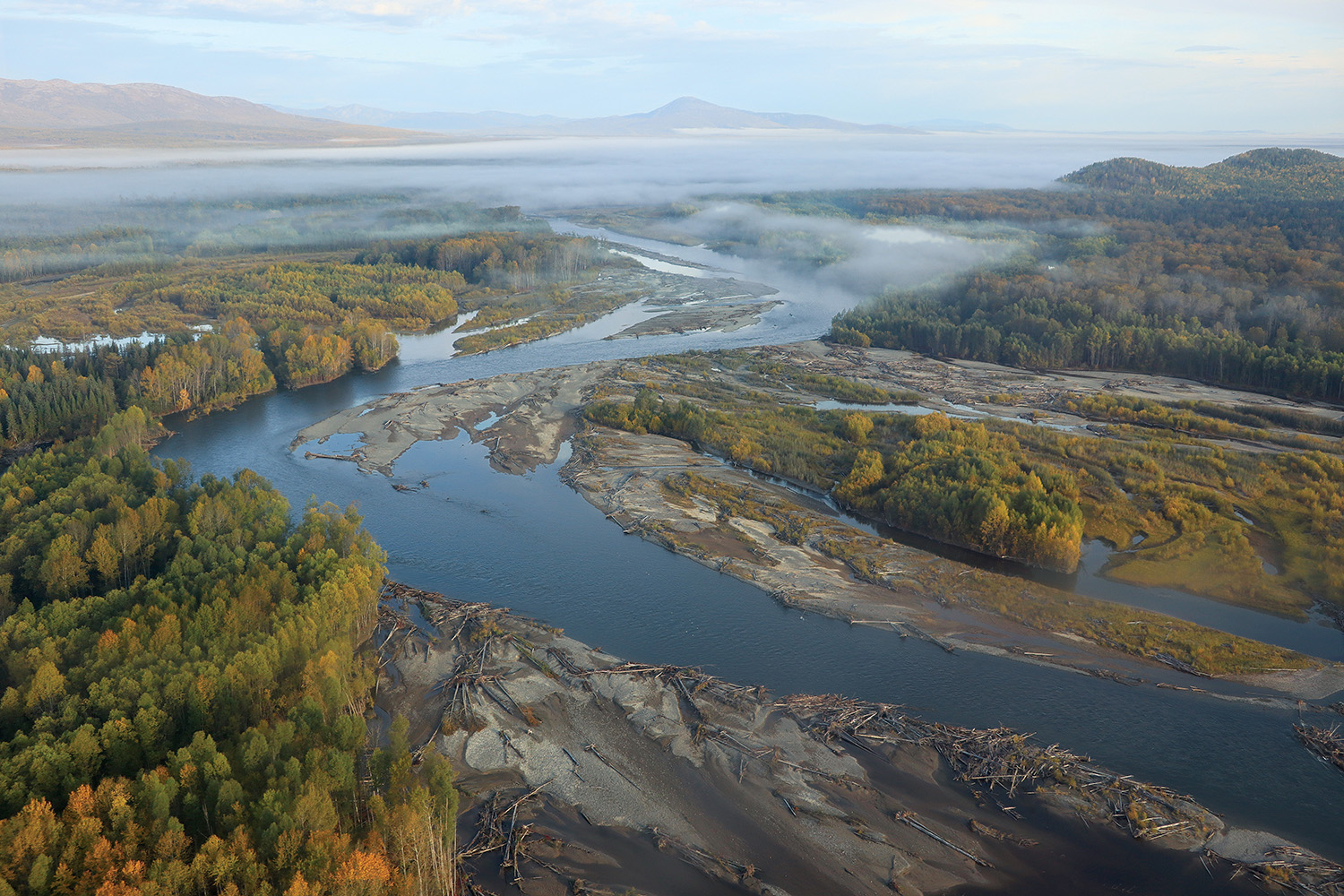
Yet taimen are still thriving in one place: the Tugur of Khabarovsk Province.
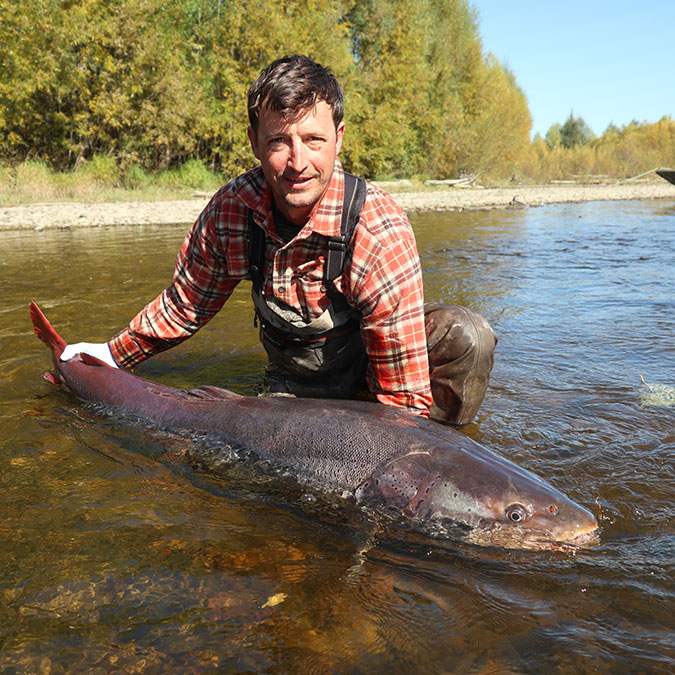
“In the Tugur, taimen can be more than 110 pounds and five feet long,” Dr. Sloat says. “Tugur taimen are a bright spot for conservation, with lessons for us on what this species needs to succeed.”
In the Tugur Basin, two key ingredients for taimen conservation have come together thanks to the work of Wild Salmon Center’s Russian partners: large scale habitat protection and sustainable catch-and-release angling. The new research highlights the importance of a third ingredient: healthy prey populations with salmon at the top of the menu.
“Tugur taimen are a bright spot for conservation, with lessons for us on what this species needs to succeed.”
Wild Salmon Center Science Director Dr. Matthew Sloat
Dr. Sloat notes that both scientists and anglers have observed larger Tugur taimen eating adult chum salmon—especially from late July to early September, as they migrate from the ocean to home spawning grounds. Tugur chum salmon are nearly two feet long, larger than most freshwater prey. When tapped as food, salmon are a nutritional powerhouse, rich in marine nutrients and fats. As part of local food webs, they’re known to help bears, eagles, and even trees grow bigger.
“What a taimen can eat is limited by how wide it can open its mouth,” Dr. Sloat says. “Anecdotally, we know that large taimen will eat salmon if they can. But we didn’t know if salmon migrations could be a driving force behind their health in the Tugur.”
“We know that large taimen will eat salmon if they can. But we didn’t know if salmon migrations could be a driving force behind their health in the Tugur.”
Wild Salmon Center Science Director Dr. Matthew Sloat
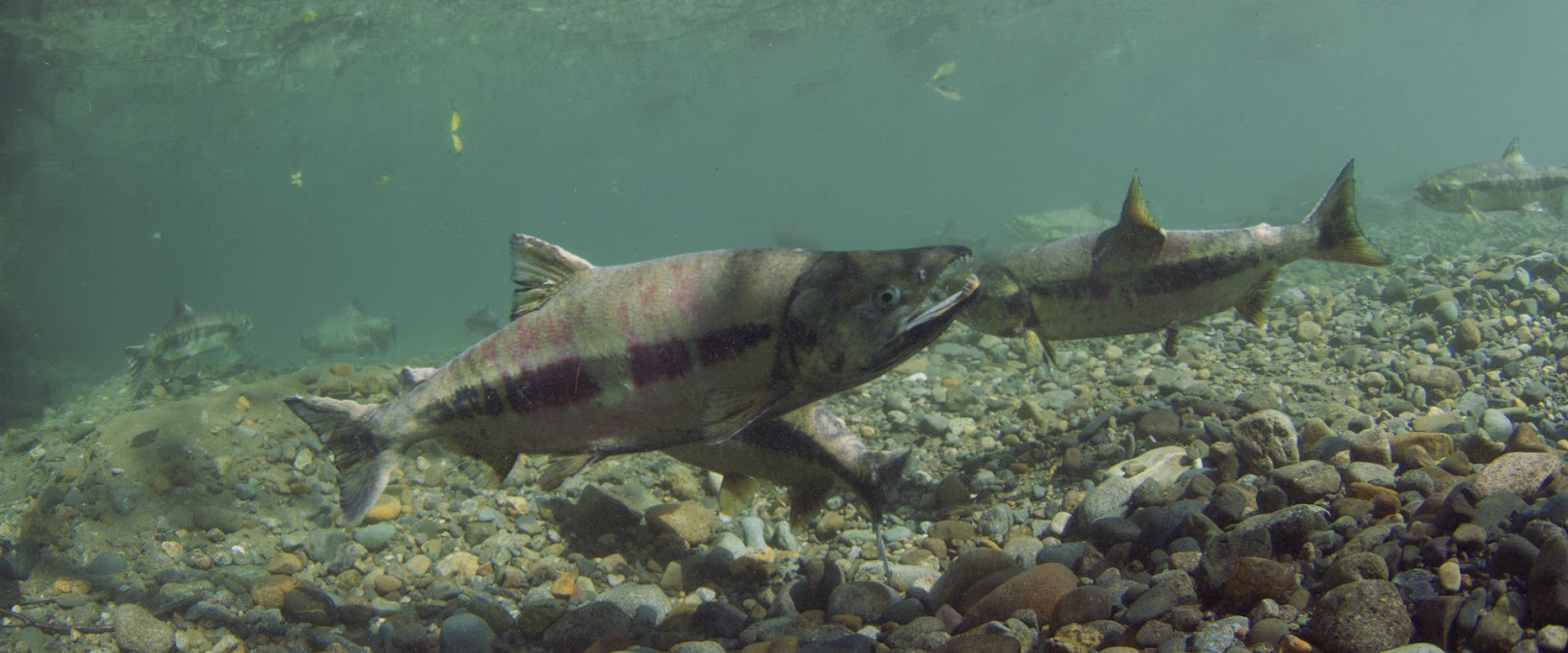
By carefully measuring the size of taimen and their prey, Dr. Sloat determined how large taimen must get before they start swallowing adult salmon whole. The research team also used stable isotopes—a method that traces freshwater and marine prey sources through the food web—to determine that in the Tugur, nearly every taimen over four feet long will prey on adult salmon.
“We found that they’re not only capable of eating adult salmon, but that in the Tugur, at least, taimen seem to rely on the salmon’s annual migration to boost their condition,” Dr. Sloat says.
Measured before and after the river’s chum salmon run, Tugur taimen gained close to ten pounds during a single season. That concentrated weight gain equates to more than four years of growth for Siberian taimen in river systems without access to salmon prey, such as in the rivers of Northern Mongolia.
“In the Tugur, at least, taimen seem to rely on the salmon’s annual migration to boost their condition.”
Wild Salmon Center Science Director Dr. Matthew Sloat
The special relationship between taimen and other salmon creates new complexity—and opportunities—for efforts to protect taimen in other Eurasian rivers.
According to Dr. Sloat, prey management can be overlooked in the conservation of taimen and other freshwater megafish. But his team’s research indicates that for members of the salmon family, habitat protection works best when coupled with sustainable fisheries management. This could be especially true in taimen systems where taimen’s prey food also support commercial, recreational, or subsistence fisheries—like in the Tugur and Koppi river systems of Russia’s Far East. In terminal fisheries near the Tugur, for example, chum salmon are harvested at rates that exceed three million fish annually.
“My hope is that our research can help decision makers set policies that enable wild fish watersheds to thrive now and in the future,” Dr. Sloat says. “Sustainable harvest limits in salmon fisheries are one key tool we can use to help balance human needs with healthy taimen ecosystems.”
“Sustainable harvest limits in salmon fisheries are one key tool we can use to help balance human needs with healthy taimen ecosystems.”
Wild Salmon Center Science Director Dr. Matthew Sloat
Related News
Freshwater species are at risk. Salmon strongholds can help reverse the decline.January 21, 2025 New Research Finds Taimen’s Supersized Strength in DNANovember 18, 2021 River TigersOctober 14, 2020Join the Movement
Stay up-to-date on what we’re doing for wild salmon and how you can help.
SUBSCRIBE