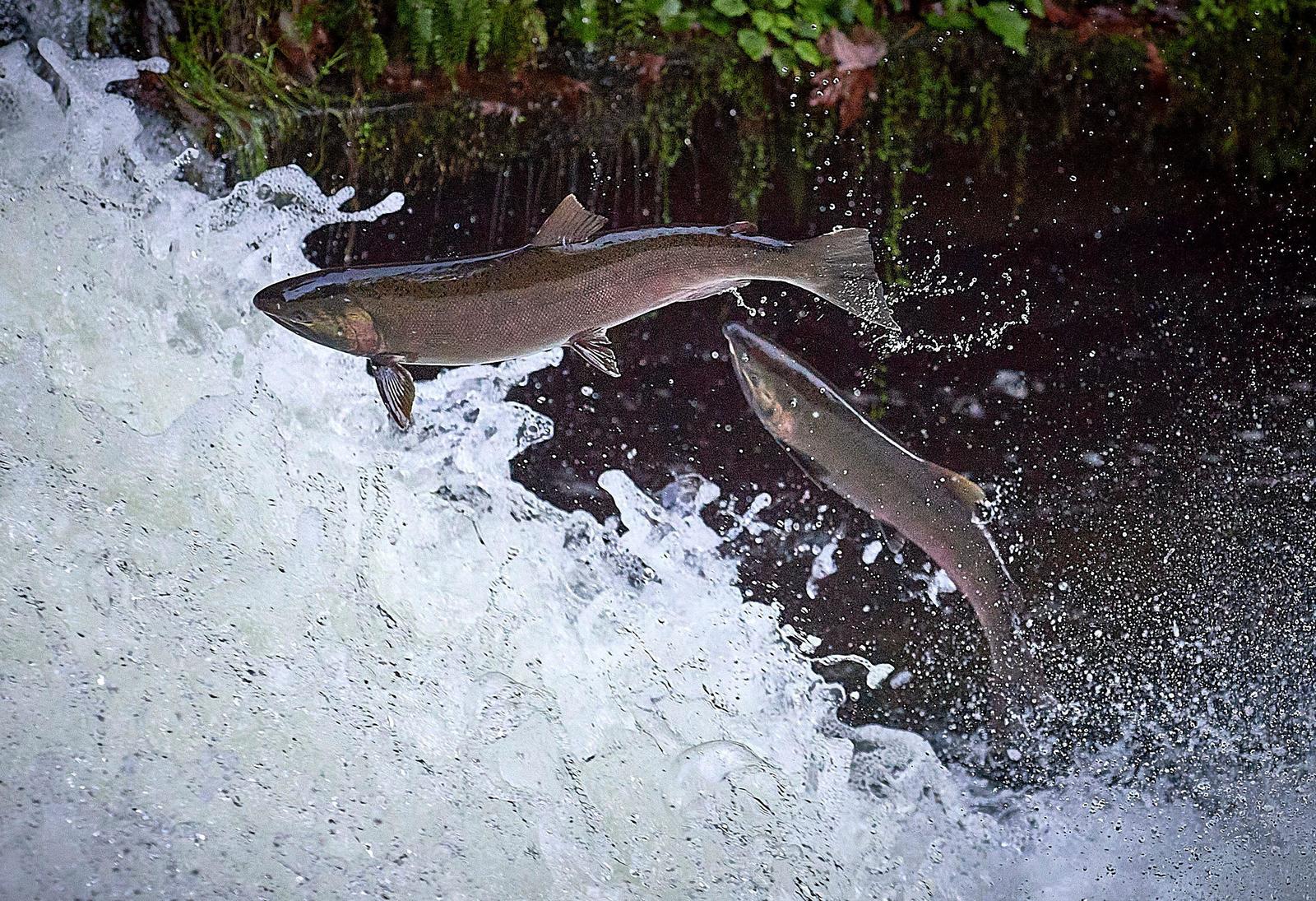
The Siletz River
Strategic Action Plan for the Resilience of Coho Salmon Recovery
Deep Dive
Read our Strategic Action Plan for the Resilience of Coho Salmon Recovery in the Siletz River
Contributors and Acknowledgments
The “Strategic Action Plan for the Resilience of Siletz Coho Salmon” was developed by the Siletz Coho Partnership, a team of dedicated resource managers and conservation professionals, representing the following agencies, organizations, and businesses:
- Confederated Tribes of the Siletz Indians
- Manulife Investment Management (formerly Hancock Natural Resource Group)
- Lincoln Soil and Water Conservation District
- MidCoast Watersheds Council
- National Marine Fisheries Service
- Natural Resources Conservation Service
- Oregon Department of Environmental Quality
- Oregon Department of Fish and Wildlife
- Oregon Department of Forestry
- Oregon Water Resources Department
- Pacific States Marine Fisheries Commission
- The Wetlands Conservancy
- Trout Unlimited
- U.S. Fish and Wildlife Service, Oregon Coast National Wildlife Refuge Complex
- U.S. Forest Service
- Wild Salmon Center
- Weyerhaeuser
The Siletz Partnership would like to thank the members of the Coast Coho Partnership (CCP), which includes the Oregon Watershed Enhancement Board (OWEB), Oregon Department of Fish and Wildlife (ODFW), National Oceanic and Atmospheric Administration (NOAA) National Marine Fisheries Service, NOAA Restoration Center, and Wild Salmon Center (WSC) for their facilitation and technical support of the planning process. We would also like to acknowledge the critical contributions of several project consultants, including: Steve Trask and Bio-Surveys for sharing 30 years of experience in coast Coho salmon population research and habitat restoration; Dr. Wayne Hoffman for sharing his detailed knowledge and vision of the Siletz watershed; TerrainWorks for generating the Netmap layers and conducting the initial spatial analyses; and Barbara Taylor and Fran Recht for their editorial support.
The Siletz Partnership would also like to thank the funders of both the planning effort – OWEB, NOAA Restoration Center, and Builders Initiative – and the first partners that stepped up to support this plan’s implementation, including NOAA, WSC, U.S. Fish and Wildlife Service (USFWS), and OWEB.
Acronyms
AQI Aquatic Inventories Project
BDA Beaver Dam Analogue
CFS Cubic Feet per Second
CMECS Coastal and Marine Ecological Classification Standard
DEQ Oregon Department of Environmental Quality
EPA U.S. Environmental Protection Agency
ESA Endangered Species Act
ESU Evolutionarily Significant Unit
FPA Oregon Forest Practices Act
HUC Hydrologic Unit Code
IP Intrinsic Potential
KEA Key Ecological Attribute
LSWCD Lincoln Soil and Water Conservation District
MCWC MidCoast Watersheds Council
MRT McKenzie River Trust
NMFS National Marine Fisheries Service
NOAA National Oceanic and Atmospheric Administration
NRCS National Resources Conservation Service
NWFSC Northwest Fisheries Science Center
OC Oregon Coast
ODF Oregon Department of Forestry
ODFW Oregon Department of Fish and Wildlife
OFW Oregon Fish and Wildlife
RM River Mile
SAP Strategic Action Plan
SWCD Soil and Water Conservation District
TMDL Total Maximum Daily Load
TNC The Nature Conservancy
USDA U.S. Department of Agriculture
USFS U.S. Forest Service
USFWS U.S. Fish and Wildlife Service
WSC Wild Salmon Center
Contents
Contributors and Acknowledgments………………………………………………………………………………….. i
Acronyms……………………………………………………………………………………………………………………… ii
List of Figures…………………………………………………………………………………………………………………v
List of Tables………………………………………………………………………………………………………………….v
Executive Summary………………………………………………………………………………………………………..vii
- Introduction: The Siletz Basin Coho Partnership and the Purpose of this Plan………………. 12
1.1 The Vision for Healthy Native Coho in the Siletz River……………………………………….. 14
1.2 Why Coho?…………………………………………………………………………………………………… 14
1.3 Scope of This Strategic Action Plan…………………………………………………………………… 16
1.4 SAP Implementation Timeline: Long-Term Goals and Outcomes……………………………. 17
1.5 Implementing Partners…………………………………………………………………………………….. 17 - The Siletz River Watershed……………………………………………………………………………………. 20
2.1 Physical Geology and Geography……………………………………………………………………… 20
Geology……………………………………………………………………………………………………….. 20
Geography…………………………………………………………………………………………………… 22
2.2 Water Resources ……………………………………………………………………………………………. 23
Water Quantity…………………………………………………………………………………………….. 23
Water Quality………………………………………………………………………………………………. 25
2.3 Biotic Systems………………………………………………………………………………………………… 25
2.4 Changing Climate and Ocean Conditions…………………………………………………………… 27
2.5 Human Settlement and Demographics……………………………………………………………….. 29
Native Residents…………………………………………………………………………………………… 29
EuroAmerican Settlement and Development……………………………………………………… 30
Siletz Communities Today………………………………………………………………………………. 32 - Siletz Basin Coho and Habitats……………………………………………………………………………… 33
3.1 Coho Salmon Life Cycle and Habitat Needs……………………………………………………….. 33
Juvenile Life History Strategies………………………………………………………………………… 33
3.2 Coho Salmon Population Abundance………………………………………………………………… 37
3.3 Hatchery Production………………………………………………………………………………………. 37
3.4 Overview of Habitat Needs and Watershed Components……………………………………… 38 - Development of the Siletz River Strategic Action Plan ………………………………………………. 43
iv ~ SAP for Coho Recovery in the Siletz River - Impaired Watershed Processes and the Strategies to Restore Them………………………………….. 47
5.1 Habitat Stressors and Limiting Factors That Affect Life History Diversity……………….. 49
5.2 Strategic Framework to Support Coho Life History Diversity in the Siletz Watershed.. 50
5.3 Combined Long-Term Outcomes by Restoration Strategy…………………………………….. 72 - Near-term Project Implementation Plan: 2025–2030……………………………………………………… 74
6.1 Emerging Opportunities………………………………………………………………………………….. 74
6.2 Near-Term Actions and Objectives……………………………………………………………………. 74
6.3 Schedule of Near-Term Restoration Projects by Focal Area…………………………………… 79 - Cost ………………………………………………………………………………………………………………………..84
- Evaluation and Adaptive Management…………………………………………………………………………. 90
7.1 The Monitoring Framework…………………………………………………………………………….. 90
7.2 Information Gaps…………………………………………………………………………………………… 96 - Sustainability……………………………………………………………………………………………………………. 98
- References……………………………………………………………………………………………………………… 99
List of Appendices………………………………………………………………………………………………………. 103
Appendix I………………………………………………………………………………………………………… 104
Appendix II………………………………………………………………………………………………………. 108
List of Tables
Table 1.1 Core Implementing Partners.
Table 5.1 Strategies prioritized for each life history type to address limiting habitat factors by sub-watershed in the Siletz Bay.
Table 5.2 Strategies prioritized for each life history type to address limiting habitat factors by sub-watershed in the lower tributaries.
Table 5.3 Strategies prioritized for each life history type to address limiting habitat factors by sub-watershed in the mid-tributaries.
Table 5.4 Relevant imperatives and actions within the Mid-Coast Water Planning Partnership’s action plan to address water quantity and quality concerns.
Table 5.5 Projected restoration outcomes of the Siletz SAP.
Table 6.1 Implementation schedule for near-term projects in the Siletz Bay sub-watersheds.
Table 6.2 Implementation schedule for near-term projects in the Siletz lower tributary subwatersheds.
Table 6.3 Implementation schedule for near-term projects in the mid-tributary sub-watersheds.
Table 7.1 Near-term project costs for Outcome 1: increased instream complexity.
Table 7.2 Near-term project costs for Outcome 2: reconnected floodplains and wetlands.
Table 7.3 Near-term project costs for Outcome 3: protection in perpetuity of floodplains and wetlands.
Table 7.4 Near-term project costs for Outcome 4: increased beaver habitat.
Table 7.5 Near-term project costs for Outcome 5: enhanced riparian function.
Table 7.6 Near-term project costs for Outcome 6: increased longitudinal connectivity.
Table 7.7 Near-term project costs for Outcome 7: upland stands to protect.
Table 7.8 Near-term project objectives and costs by outcome.
Table 8.1 Implementation and effectiveness of monitoring for long-term Outcome 1: increased instream complexity.
Table 8.2 Implementation and effectiveness monitoring for long-term Outcomes 2 & 3: floodplain and wetland restoration and long-term protection.
Table 8.3 Implementation and effectiveness monitoring for long-term Outcome 4: increased beaver habitat.
Table 8.4 Implementation and effectiveness monitoring for long-term Outcome 5: enhanced riparian function.
Table 8.5 Implementation and effectiveness monitoring for long-term Outcome 6: longitudinal connectivity restored.
Table 8.6 Implementation and effectiveness monitoring for long-term Outcome 7: upland stands protected.
List of Figures
Figure 1.1 Distribution of salmon species in the Siletz River watershed.
Figure 2.1 Major sub-watersheds of the Siletz River.
Figure 2.2 Geology type within the Siletz River watershed.
Figure 2.3 Land ownership in the Siletz River watershed.
Figure 2.4 Land cover type in the Siletz River watershed.
Figure 2.5 Projected change in stream temperatures in the Siletz River watershed.
Figure 2.6 Projected change in base flows in the Siletz River watershed.
Figure 3.1 The life cycle of Coho Salmon.
Figure 3.2 Coho distribution by primary habitat use.
Figure 3.3 Siletz Coho Population Estimates (1990–2022) (ODFW 2024).
Figure 3.4 Hatchery Coho releases in the Siletz River (1970–2005) (ODFW 2024).
Figure 3.5 Representation of the four juvenile life history pathways recognized for OregonCoast Coho salmon.
Figure 3.6 Components of a watershed.
Figure 3.7 The Siletz River watershed.
Figure 5.1 Long-term LWD placement priority reaches for natal site rearing juveniles.
Figure 5.2 Stream reaches with high beaver habitat suitability.
Figure 5.3 Long-term priority reaches for riparian vegetation enhancement.
Figure 5.4 Existing temperature monitoring locations in the Siletz River watershed.
Figure 5.5 Long-term strategy locations for riverine floodplain reconnection.
Figure 5.6 Long-term LWD placement priority reaches for mainstem rearing juveniles.
Figure 5.7 Areas of high beaver suitability for mainstem rearing juveniles.
Figure 5.8 Stream crossings and known barriers on salmon-bearing streams.
Figure 5.9 Biotic habitat type of the lower Siletz estuary.
Figure 5.10 Prioritization of tidal wetland landward migration zones for 4.7-foot sea level rise.
Figure 5.11 Priority uplands with high probability of LWD input from landslides.
Figure 5.12 Water diversion type and quantity in the Siletz River watershed.
Figure 6.1 Near-term projects in the Siletz Bay sub-watersheds.
Figure 6.2 Near-term projects in the lower tributary sub-watersheds.
Figure 6.3 Near-term projects in the mid-tributary sub-watersheds.
Executive Summary
For millennia, Coho salmon (Oncorhynchus kisutch) have returned like clockwork to the Siletz River, spawning and rearing across the basin in its mainstem, tributaries, and estuaries. Through the years, these Coho evolved unique adaptations that have allowed them to survive and flourish in the Siletz River’s ever-changing, diverse environment. Scientists estimate that one to two million adult Coho once returned to river systems along the Oregon Coast during favorable ocean conditions, often creating concentrations of several hundred spawners per mile in coastal rivers such as the Siletz (NMFS 2016).
The area’s healthy ecosystems began to decline following the arrival of European settlers in the 1800s. The new settlers initiated over 150 years of resource extraction for fisheries, timber, agriculture, and minerals, substantially affecting watershed health and function. These practices impaired habitats and ecosystem processes throughout the Siletz, reducing habitat quantity and quality and, ultimately, the abundance and productivity of Coho and other salmonid populations. Factors in the watershed leading to salmonid declines include fish passage barriers, loss of stream complexity, degraded water quality, and conversion of estuary and wetlands into agricultural lands. In addition to reduced habitat quantity and quality, the combined effects of Coho hatchery production, high harvest rates, and poor ocean conditions contributed to the significant decline in salmon populations up and down the Oregon Coast in the mid-1900s. The widespread decline of Oregon Coast Coho led to its listing as “threatened” by the National Marine Fisheries Service (NMFS) in 1998 under the federal Endangered Species Act (ESA).
Since the ESA listing, collaborative efforts by state and federal agencies, tribes, local watershed groups, non-governmental organizations, and private landowners have helped turn the tide on the species’ decline. Conservation plans developed at the state and federal levels guide these efforts for OC Coho recovery; the state of Oregon developed the Oregon Plan for Salmon and Watersheds in 1997, followed by the Oregon Coast Coho Conservation Plan in 2007. Then, in 2016, NMFS published the federal ESA Recovery Plan for Oregon Coast Coho Salmon. These plans aim to improve the viability of the species and ensure the long-term persistence of naturally self-sustaining Coho populations.
Habitat restoration priorities established under these plans are driven by one central goal: to protect and restore the freshwater and estuarine rearing habitats that support juvenile survival and overall productivity (NMFS 2016). This Strategic Action Plan (SAP) builds upon the broader federal and state plans to restore the Siletz Coho population.
The Siletz Coho SAP recognizes that the species’ long-term recovery will depend on strategic partnerships where public and private stakeholders work together towards a shared vision. The effort must unite economic, ecological, and social goals and align limited financial capital to develop and implement solutions that protect and restore Coho habitats while sustaining and nurturing the long-term viability of working farms, forests, and communities.
The process of developing the Siletz Coho SAP began in 2018 when restoration practitioners and local fisheries managers agreed that a comprehensive, strategic plan for the Siletz Basin needed to: 1) determine specific locations where protection and restoration strategies would have the greatest positive impact toward increasing watershed function and habitat productivity over the longterm, 2) coordinate project implementation and leverage funding in the short term, and 3) formalize the commitment of a robust set of partners who have collaborated on Coho recovery and will continue to do so into the future.
The Siletz Basin Coho Partnership (Siletz Partnership) convened this effort with the support of the Coast Coho Partnership, a team of public and private agencies and organizations working to accelerate Coho recovery throughout the Oregon Coast. The Siletz Partnership approached the development of this SAP with the core belief that healthy ecological, economic, and social conditions will ensure a sustainable future for Siletz Coho. The Partnership strives to achieve watershed conditions that will support a full range of life histories for wild Coho in the Siletz River watershed. It recognizes that juvenile Coho follow a mix of life history “pathways” during their freshwater residency. These different pathways enable them to travel between varied habitats in the ever-changing coastal environment. It is hypothesized that individuals optimize habitat use to maximize fitness and survival in freshwater and estuarine environments and prepare for survival in the ocean. Sustaining various life history pathways is a core focus of the Siletz River Coho SAP. The expression of different life history pathways provides resilience at both the population and the ESU level, increasing the likelihood that local and meta populations will persist in the face of sudden or gradual variations in watershed function and the availability of high-quality habitats at various spatial scales.
As identified in the federal recovery plan and acknowledged by the local experience of the Siletz Partnership, Coho productivity and longterm viability in the Siletz Basin are primarily limited by the reduced quality, quantity, diversity, and connectivity of different freshwater and estuarine rearing habitats. Thus, a key measure of success for the Siletz River Coho SAP will be the protection, restoration, and connection of diverse, high-quality rearing habitats in mainstem, tributary, off-channel, and estuarine reaches.
The Siletz Partnership identified the following vision for native Coho in the Siletz River:
Our vision is to support an abundant and resilient wild Coho population through enhancing diverse habitats within the Siletz River Basin. In doing so, we will support fishing, economic, and aesthetic benefits for current and future generations.
Actions to achieve this vision aim to improve watershed processes that provide cool, clean water, large wood, and spawning gravel to the stream and to promote beaver throughout the watershed. Maintaining and restoring a connected system of diverse, healthy rearing habitats is needed to support the full expression of life history diversity in the basin. This diversity is especially critical given the expected changes in freshwater habitats due to climate change.
Through the implementation of this SAP, local partners hope to achieve several long-term goals.
To achieve these goals, this SAP emphasizes the restoration of critical Coho habitats by repairing the watershed processes that generate and maintain them. This process-based approach focuses on a habitat strategy that seeks to identify, protect, and restore the stream and estuarine reaches most capable of supporting Coho across the full expression of life history types. The primary strategies presented in this plan seek to conserve and increase the quality and quantity of Coho habitats, including for life histories where Coho fry and parr move to non-natal habitats before outmigration. Access to lower tributary reaches, cold water refugia, and connected off-channel rearing and estuarine habitats is especially important because these areas support the variety of known life history strategies used by Coho in the Siletz watershed. The strategies aim to enhance riparian conditions to increase shade, stream stability, and future large-wood delivery to tributaries; actively install large-wood structures and support beaver activity to promote instream complexity and floodplain interaction in and around critical habitats; reconnect tidal wetlands, especially in confluence areas; and protect and enhance instream flows during critical periods.
Importantly, the Partnership aims to implement the strategies in ways that also promote economic recovery and a working landscape. The ultimate vision is a healthy watershed, connected from headwaters to the ocean, that supports a thriving fish population and a vital local economy.
Strategic Framework for the Siletz River Watershed:
The SAP’s Strategic Framework prioritizes restoration strategies that will restore conditions to rebuild Coho life history diversity and viability in the Siletz River watershed. This framework identifies seven strategies that will achieve the desired outcomes by 2045.
Strategy 1: Restore instream complexity and stream-floodplain interaction in mainstem systems, tributaries, and sloughs through the installation of large wood.
Outcome #1: Floodplain-channel interaction and instream complexity are increased through the addition of LWD in 78 miles of mainstem systems, tributaries, and sloughs. An additional 23 miles of instream assessments will be conducted to increase potential restoration mileage.
Strategy 2: Restore and reconnect freshwater and tidal floodplains and wetlands instream complex.
Outcome #2: Rearing opportunities are increased in 1,123 acres of floodplains and wetlands through the restoration of hydrologic regimes, fish access, and ecologically appropriate native plant communities in freshwater and brackish systems.
Strategy 3: Ensure long-term protection of high-priority wetlands and floodplains.
Outcome #3: The long-term protection of 847 acres of freshwater and tidal wetlands and floodplains will be obtained through a series of voluntary acquisitions.
Strategy 4: Encourage beaver persistence in tributary and floodplain habitats.
Outcome #4: Slow water habitats and beaverfavored forage are re-established along 22 miles of tributary streams.
Strategy 5: Enhance riparian habitats along tributaries through native plantings and the management of invasive species.
Outcome #5: Riparian function is enhanced along 40 miles of the Siletz River and its tributaries, reducing stream temperatures and erosion and increasing macro-invertebrate abundance and long-term potential for large wood recruitment.
Strategy 6: Increase longitudinal connectivity by addressing problematic stream crossings.
Outcome #6: All crossings on Coho-bearing streams will be evaluated and longitudinal connectivity will be restored in selected reaches with high-quality juvenile rearing habitat.
Strategy 7: Ensure future large-wood delivery by promoting update forest policy, landowner outreach, and acquisitions.
Outcome #7: Through policy, outreach, or acquisitions, the long-term potential for the conservation and restoration of watershed processes is improved through the protection of 8,689 acres of selected timber stands throughout the Siletz
Basin.
The SAP includes a monitoring framework to evaluate both the rate that the actions are implemented and the degree that they produce the desired results at a meaningful scale. The monitoring framework also presents several critical data gaps, which, once filled, may redirect the team’s priorities for implementation.
Finally, like all plans, this SAP has been generated with imperfect and evolving information. Most notably, considerable uncertainty exists regarding how global climate change predictions will challenge many assumptions made about future local watershed conditions and how aquatic systems may respond to restoration actions. Additionally, implementing the projects identified in the SAP relies on willing landowners. Thus, adaptive management is essential to the longterm success of this plan and the Partnership’s ability to reach stated outcomes.
Continue reading the full strategic action plan here.